EN
EN


For anyone who has ever pulled into a campsite just as the sun is dipping below the horizon, speed matters. The quicker the roof tent deploys, the sooner one can relax, cook dinner, and enjoy the evening air. However, not all roof tents are built for speed. The mechanical design of the tent dictates a fundamental difference in how many minutes it takes to get from a parked car to a fully set up, secure sleeping area. Understanding this difference before making a purchase can save a lot of frustration at the end of a long day of driving. It also helps new owners set realistic expectations. Some tents pop open almost instantly, while others require a bit of physical effort and a learning curve.
Hard-Shell vs. Soft-Shell: The Engineering That Defines the Minutes
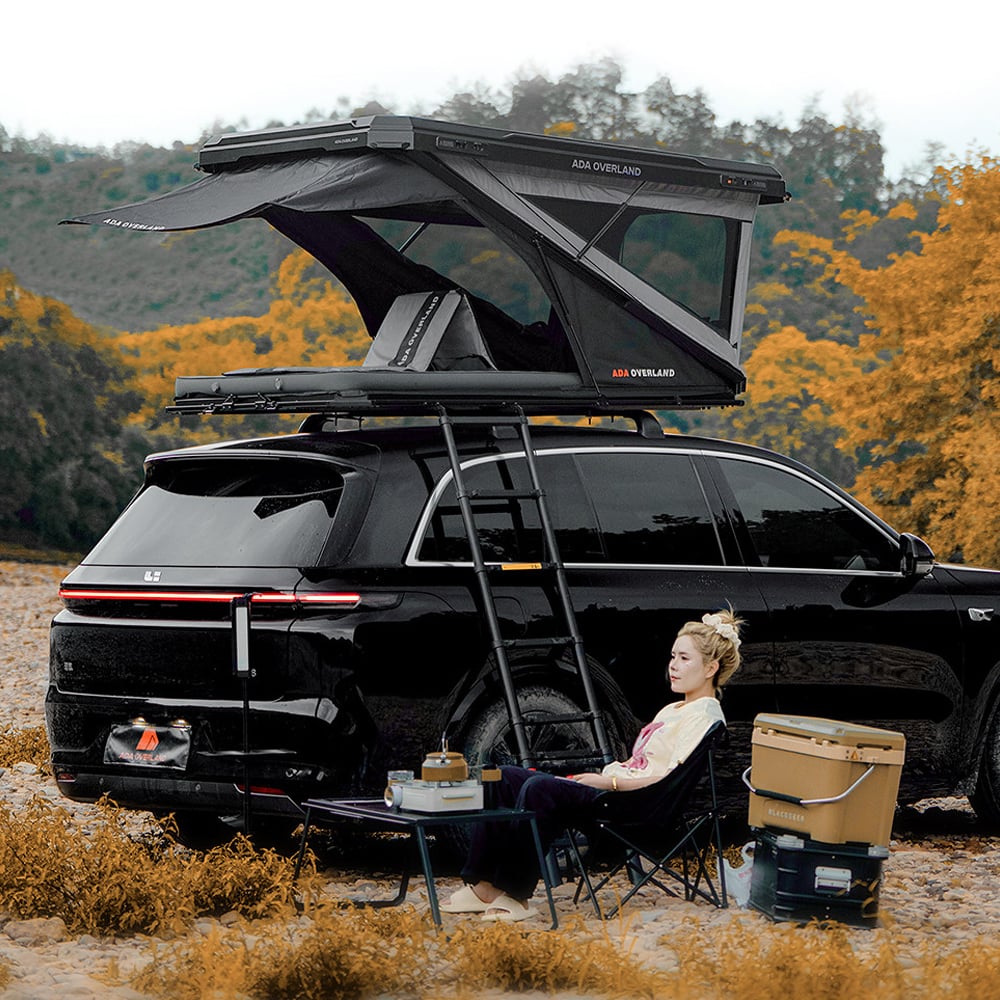
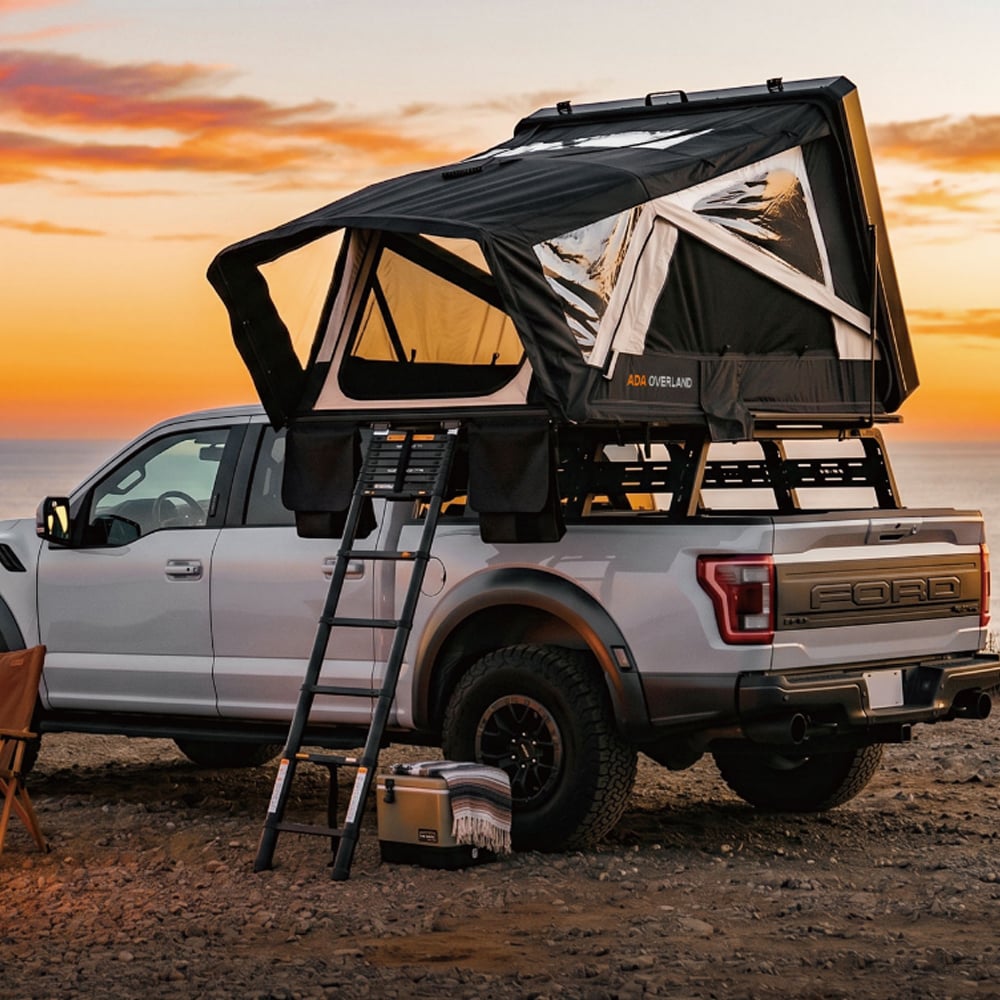
The biggest factor driving setup speed is the physical architecture of the tent itself. Hard-shell roof tents rely on gas struts—similar to what one would find on the trunk of a hatchback car. When the latches are released, the gas pressure pushes the lid open automatically. This mechanism removes almost all manual physical effort. The user simply unlocks the shell, lets it rise, and the tent is effectively deployed in well under two minutes. The bedding stays inside the closed hard shell during driving, so there is no need to remove and re-install mattresses or blankets. In contrast, soft-shell roof tents operate on a different principle entirely. Because they are made of foldable fabric, they must be assembled manually. This involves unzipping and removing the protective PVC cover, extending the long telescopic poles, locking them into position, and securing the fabric to avoid wrinkles and gaps. Particularly for a solo user, managing this large, floppy fabric in an open space can stretch the total setup time well past ten minutes. When wind blows or rain starts, the physical challenge of wrestling a soft-shell tent into shape only increases.
The Reality of Solo Setup vs. Teamwork
The number of hands involved in the setup process creates a major gap in efficiency. A soft-shell tent is notoriously difficult for a single person to handle efficiently. While one person is trying to extend the poles on one side, the fabric naturally shifts or tangles on the other side. Frequent campers have learned that the learning curve for the soft-shell can be steep, often requiring a few frustrating practice runs. However, a second pair of hands changes the equation immediately. With two people, one can stabilize the tent structure while the other inserts the poles and adjusts the tension. In these scenarios, the total time can be cut nearly in half. Hard-shell tents, conversely, are fundamentally designed for independence. Because the gas struts handle the heavy lifting, a solo traveler can unlock the latches and have the tent standing in a matter of seconds, requiring no assistance from a partner. For those who frequently travel alone, this independence is a massive practical advantage.
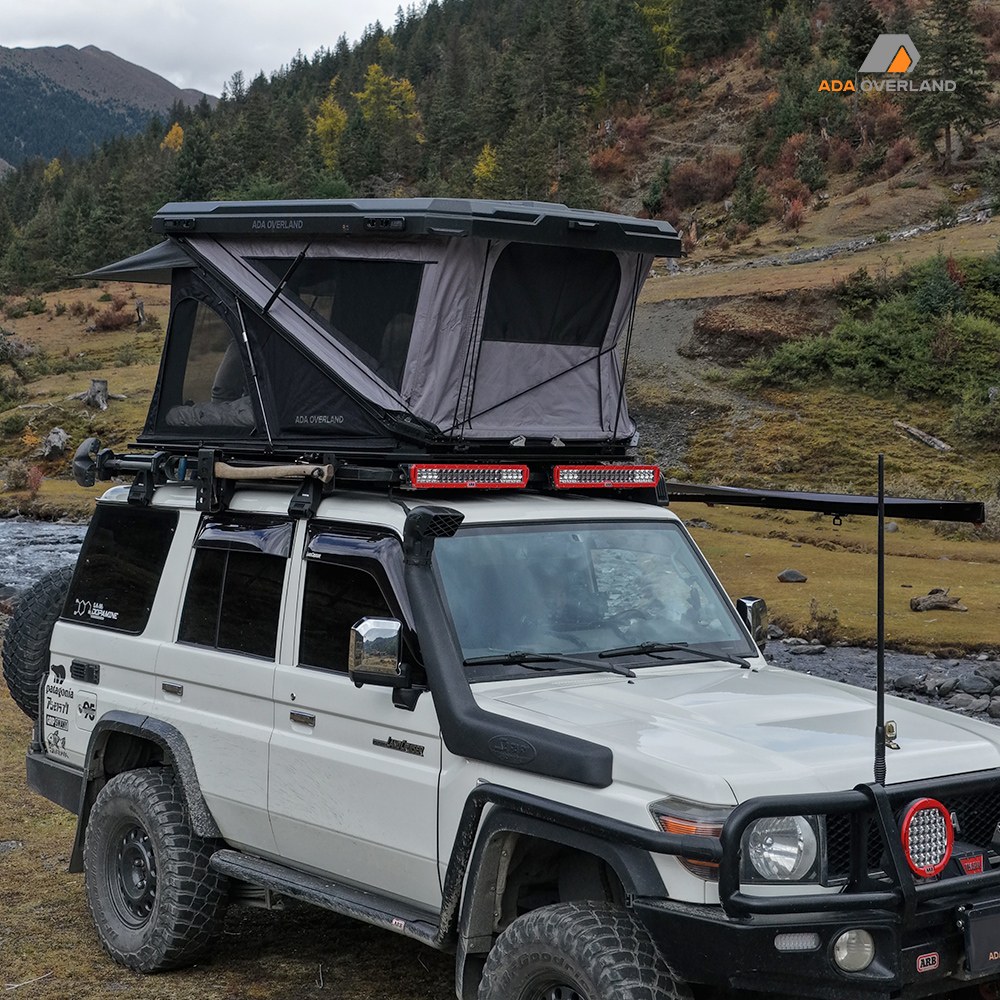
It is critical to understand that setup time at the campsite is different from the initial installation on the vehicle. The first mounting process—attaching the tent’s brackets to the roof crossbars—often takes an hour or more. However, once the brackets are fixed firmly to the vehicle, the campsite routine becomes much faster. The precise spacing of the crossbars plays a major role in the long-term speed. If the crossbars are spaced correctly according to the manufacturer’s specifications, the tent sits snugly without any wobbling. This eliminates the need for re-tightening clamps or adjusting shims before every trip. Taller vehicles, such as lifted SUVs, add a physical challenge, especially when solo. Reaching high to open the latches or adjust the straps can be slightly awkward, which adds a few seconds to the total time. Hard-shell models are particularly forgiving here, as their one-motion opening mechanism does not require reaching for multiple guy lines or pole sections.
Why the First Attempt Is Always the Longest
No one should expect to be a speed demon on the very first try. The physical steps involved may seem logical, but muscle memory takes time to develop. On the first attempt at home, a user might spend twenty minutes figuring out the correct order for inserting poles or aligning the ladder. This is entirely normal. Experienced overlanding enthusiasts always recommend doing a dry run in the driveway long before the first road trip. This controlled environment allows the owner to inspect the latches, check the operation of the struts, and verify that all necessary components are present. The 2023 field data aggregated from multiple off-road forums consistently shows that the majority of expensive delays on the trail are caused by simple oversight, such as forgetting a tool or not fully understanding the unfolding sequence. A few practice cycles at home eliminate nearly all these problems.
How Repetition Builds Muscle Memory
As the number of uses increases, the setup routine gradually transitions from a conscious struggle to an automatic, intuitive process. After setting up the tent four or five times, the user starts to remember the exact latch sequence without needing to look at the manual. The movements become fluid. Those who use their roof tent frequently report that they can achieve consistent, repeatable setup times of under three minutes for hard-shells and about seven to eight minutes for soft-shells once they have practiced a dozen times. There is a point where improvements hit a plateau; shaving off the final few seconds is often unimportant compared to ensuring the tent is safely tensioned. The true goal is not to beat a stopwatch, but to reach a level of comfort where setting up the tent feels like a relaxing part of the travel routine, rather than a stressful chore.
Outdoor conditions add a layer of variability to the equation. A perfect setup on a still, sunny day becomes significantly more difficult when the wind starts to gust. Soft-shell tents, with their broad fabric panels, act like sails. A sudden gust of wind can catch the loose fabric and twist the frame, requiring the user to pause and secure the material down again. This can easily double the overall time spent on setup. Hard-shell tents hold a major advantage in these unpredictable conditions. Because the rigid top is held by gas struts, the structure is immediately rigid and resistant to flapping. The user can lock the lid into place without worrying about the wind pulling the material away. For campers who frequent exposed coastlines or high mountain passes, this weather resistance is a major selling point that goes far beyond just convenience.
The Impact of Consistent Hardware Quality on Performance
It is worth noting that the reliability of the gas struts, the strength of the latches, and the smoothness of the zippers all depend heavily on the manufacturing tolerances of the hardware. A roof tent that is built with cheap components will start to show its flaws after a few dozen deployments. A manufacturer that operates under recognized quality management systems, such as ISO 9001, subjects every batch of gas struts and hinges to fatigue testing before assembly. By maintaining a transparent supply chain and strict control over the production of the aluminum frames and fabric stitching, reputable factories ensure that the setup mechanism remains smooth and predictable for years. For an adventurer who relies on their shelter to perform every time, knowing that the product is built with disciplined engineering provides the ultimate peace of mind.
 Hot News
2026-09-23
2026-09-25
2026-09-22
2026-09-15
2026-09-13
2026-09-06

Zhejiang Ada Outdoor Products Co.,Ltd. provides premium rooftop tents and outdoor camping gear for global B2B partners. 8+ years, 60+ patents, strict QC. Trusted by international brands. Request OEM quote today.