EN
EN


The Measurement That Gets Ignored Until It Is Too Late
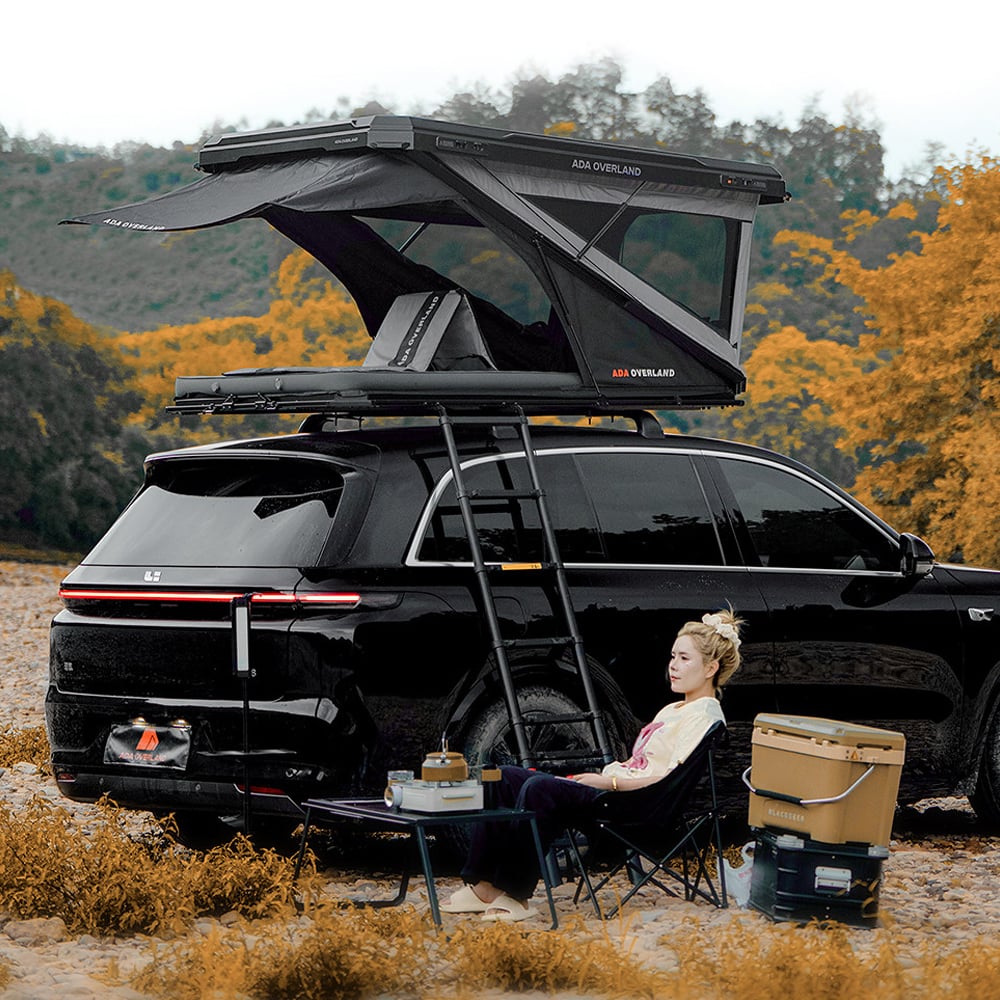
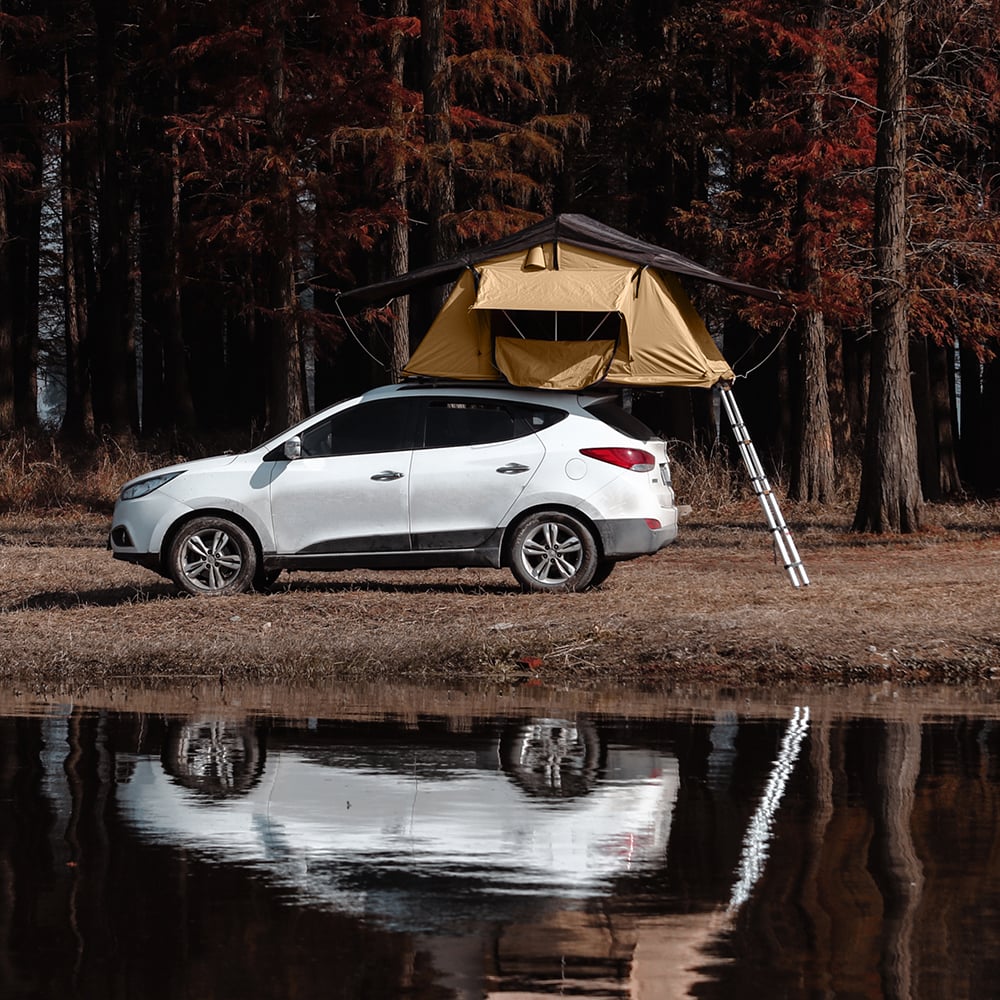
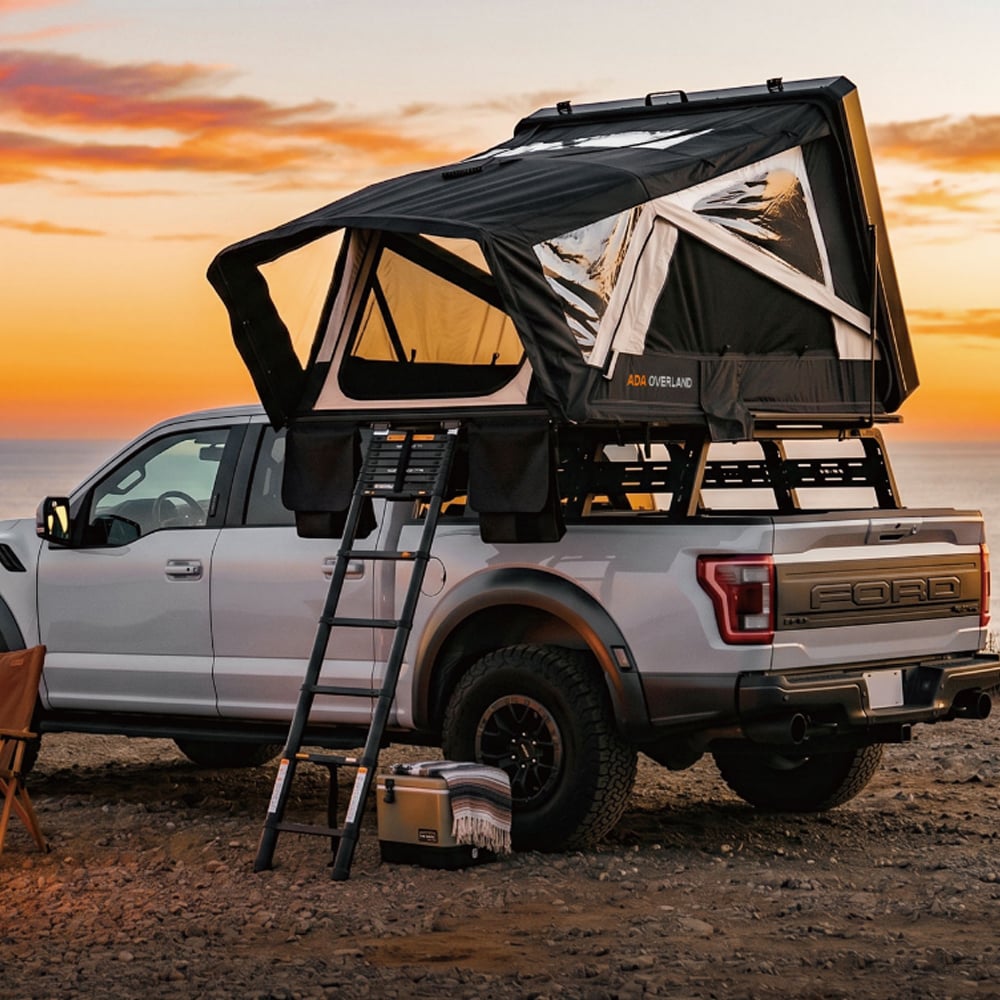
Every overland build starts with infinite roof rack space and ends with a negotiation between the rooftop tent, the awning, the recovery boards, and the solar panel. The awning gets specified last — usually by deployed coverage area — and the folded dimensions get checked after the unit arrives and does not fit between the tent and the rack end cap.
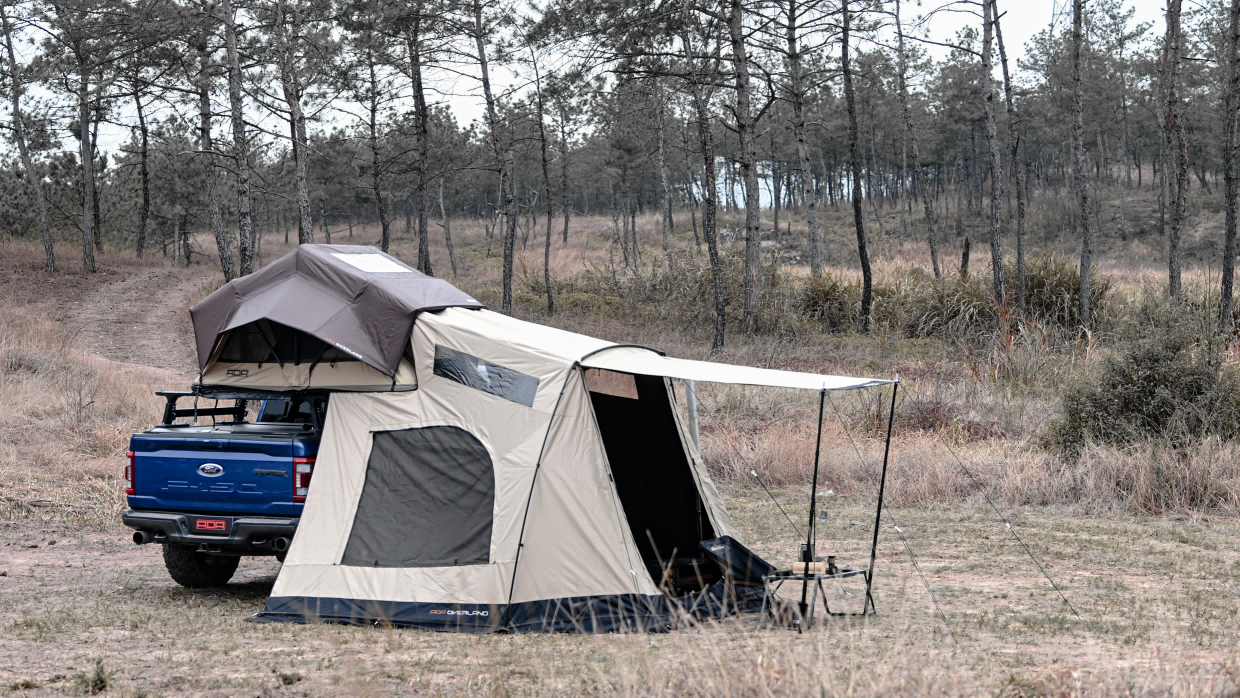
A free standing awning differs from a vehicle-mounted awning in one critical storage dimension: it does not live permanently on the roof rack. It travels inside the vehicle, in a cargo drawer, or strapped to a spare tire carrier. The folded dimensions determine whether it rides in the cabin or gets left in the garage.
The 270-degree design provides the most deployed coverage — roughly 200 square feet of shade wrapping around the vehicle's rear and side. The folded package reflects that coverage: a typical 270-degree free standing awning packs into an aluminum extrusion or heavy-duty fabric bag measuring approximately 84 inches (214cm) long, 12 inches (30cm) wide, and 8 inches (21cm) high. Weight ranges from 60 to 84 pounds depending on shell material — aluminum shells add roughly 15 pounds versus canvas bags but provide impact protection during transport over rough terrain.
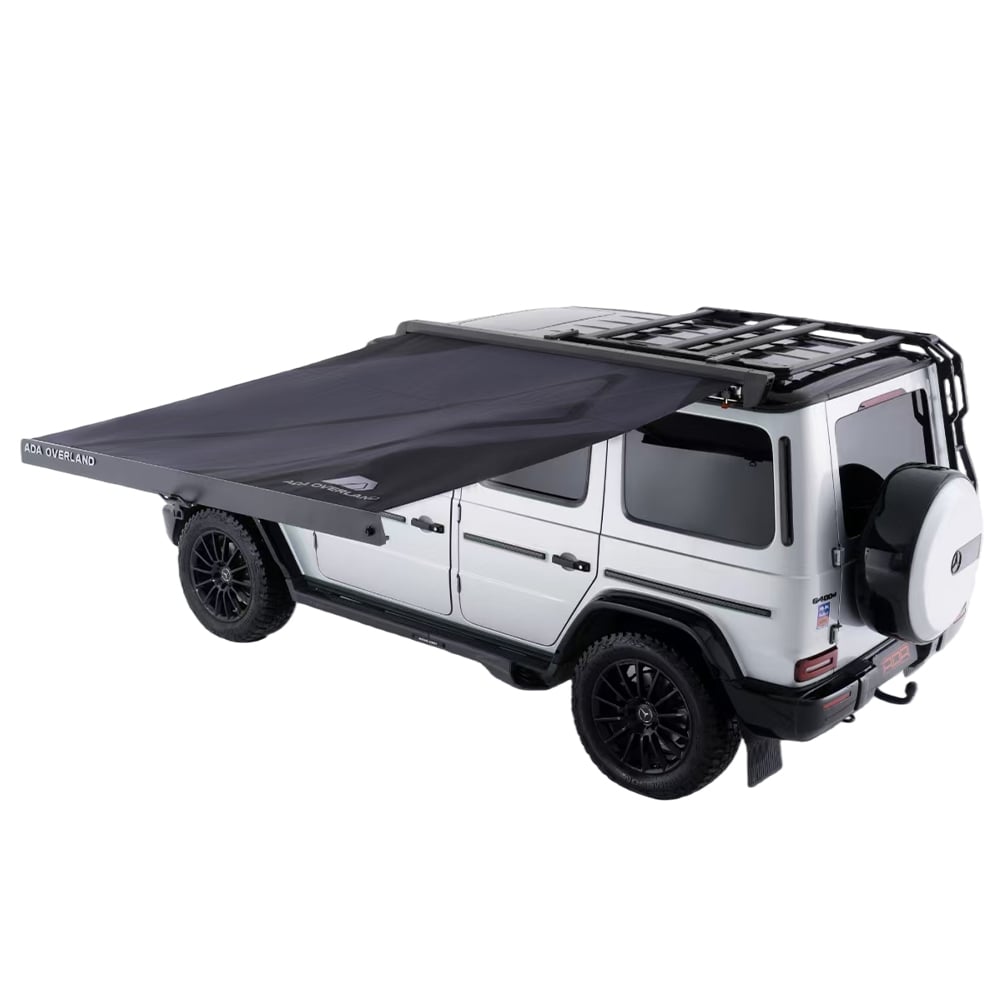
The critical dimension is length. At 84 inches, a 270-degree awning matches the width of a mid-size SUV's roof rack crossbar span. It rides between the side rails with zero overhang — a clean fit that does not create a width hazard on narrow trails. On compact crossovers with 40-44 inch roof widths, an 84-inch awning overhangs the vehicle body by 20 inches per side, which is both a trail hazard and potentially illegal on public roads depending on local vehicle width regulations.
A 180-degree free standing awning deploys roughly 120 square feet of shade along one vehicle side. The folded package is proportionally smaller: 72-78 inches long, 10-12 inches wide, 6-8 inches high. Weight runs 40-55 pounds. The shorter length makes 180-degree models compatible with compact SUVs and crossovers without overhang issues, and the reduced weight allows single-person roof mounting where 270-degree models require two people or a lift-assist system.
The simplest design — a straight roll-out panel extending 6-8 feet from the vehicle side. A 90-degree free standing awning folds to roughly 72-80 inches long, 5-6 inches in diameter when rolled, and weighs 25-35 pounds. These compact dimensions allow storage inside a vehicle cargo area or strapped vertically behind a rear seat. The trade-off is coverage: roughly 45-55 square feet, sufficient for two people seated but marginal for a full camp kitchen setup.
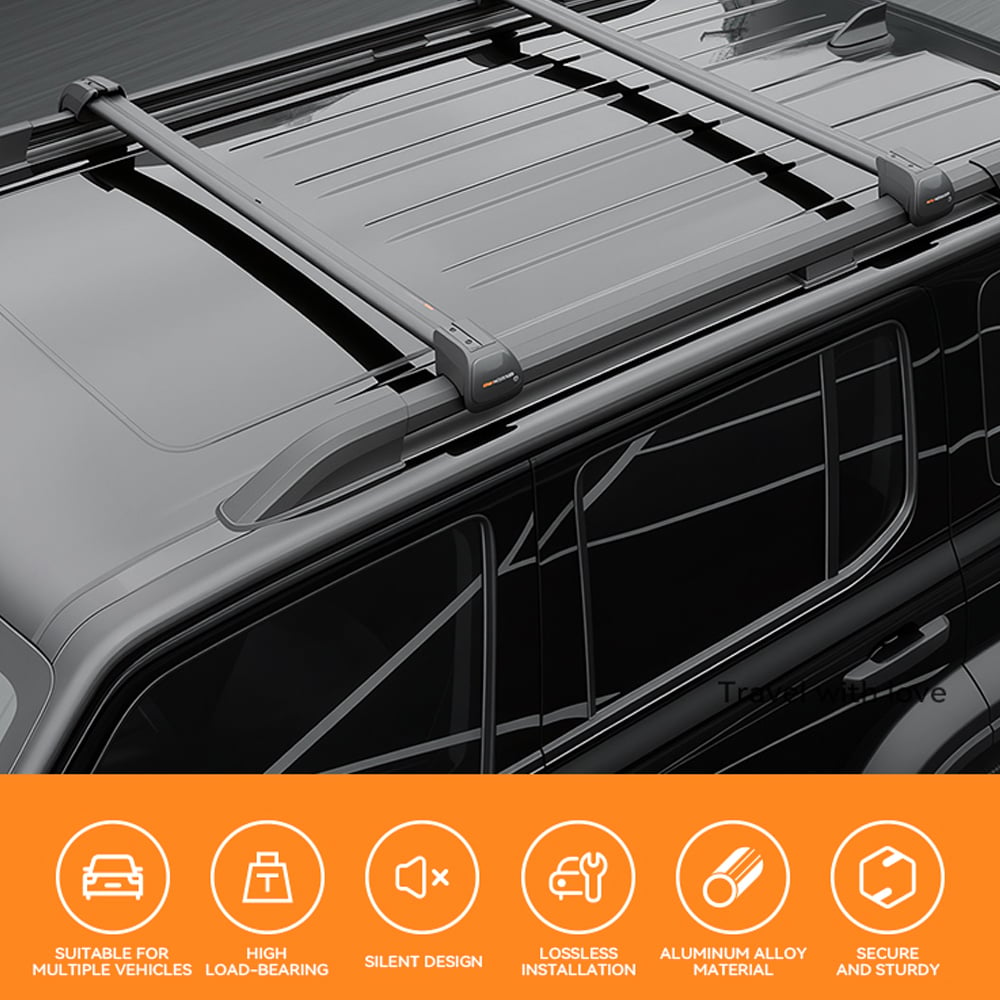
Most roof rack systems space crossbars 24-32 inches apart. A free standing awning mounting bracket typically requires a minimum of 24 inches between bars for stable three-point mounting. Crossbars spaced wider than 36 inches require an adapter plate, which adds 3-5 pounds and creates a new potential vibration point.
For awnings transported inside the vehicle, measure the cargo area length with rear seats folded. A 84-inch awning bag fits in a Toyota Land Cruiser or Jeep Wrangler Unlimited cargo area (roughly 60-65 inches of length with seats up, 80-85 inches with seats down). In a Subaru Outback or similar wagon, the same bag leaves 3-4 inches of clearance at each end — functional but tight. For compact crossovers with 65-70 inch maximum cargo lengths, the 270-degree awning does not fit internally and must ride on the roof rack, negating the "free standing" storage advantage.
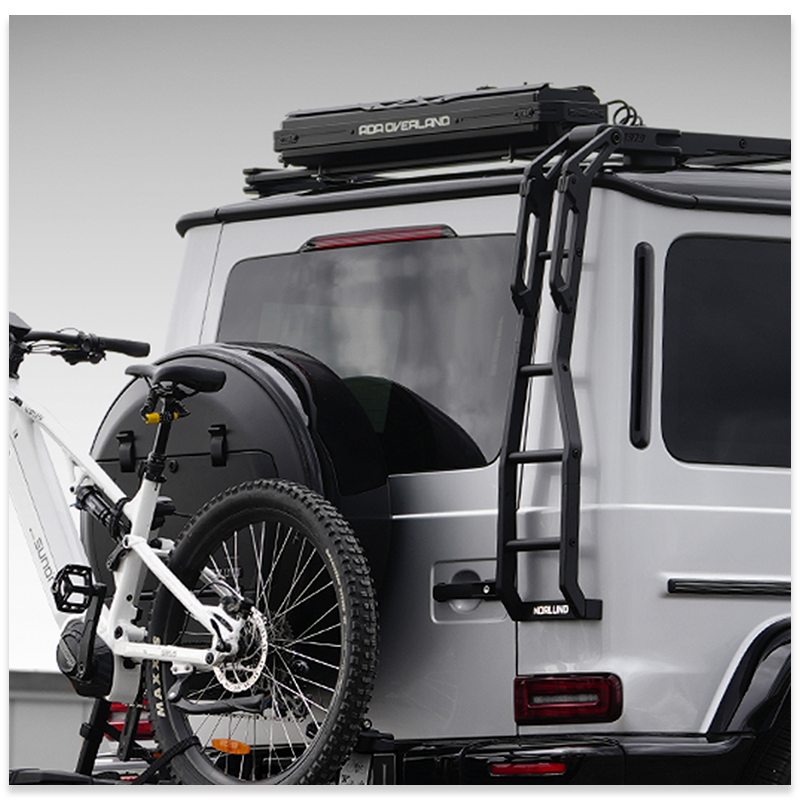
A free standing awning mounted on the roof rack adds its full weight to the vehicle's dynamic roof load. A rooftop tent weighing 130 pounds plus a 270-degree awning at 75 pounds totals 205 pounds, exceeding the dynamic rating of many factory roof systems. The fix — mounting the awning to an aftermarket roof rack with a 300+ pound dynamic rating — adds $400-800 to the build cost and 40-60 pounds of rack weight, further stressing the vehicle's gross vehicle weight rating (GVWR).
An overland vehicle rental company in Colorado managing a fleet of 15 Toyota Tacomas tested three awning configurations across a summer season. Five trucks carried 270-degree free standing awning models (84 inches, 75 pounds) permanently mounted to aftermarket roof racks. Five carried 180-degree models (74 inches, 48 pounds) stored inside diamond-plate cargo boxes. Five carried 90-degree models (78 inches, 28 pounds) strapped to bed-rack crossbars.
After one season of guided trips through the San Juan Mountains, the company standardized on the 180-degree internal-storage configuration. The 270-degree models reduced usable roof rack space to the point that solar panel mounting required a custom bracket solution costing $200 per vehicle. The 90-degree models generated consistent client complaints about insufficient shade during group meal preparation. The 180-degree models, stored inside cargo boxes, kept the roof rack free for a 100-watt solar panel and recovery boards while providing adequate shade for 4-6 person groups.
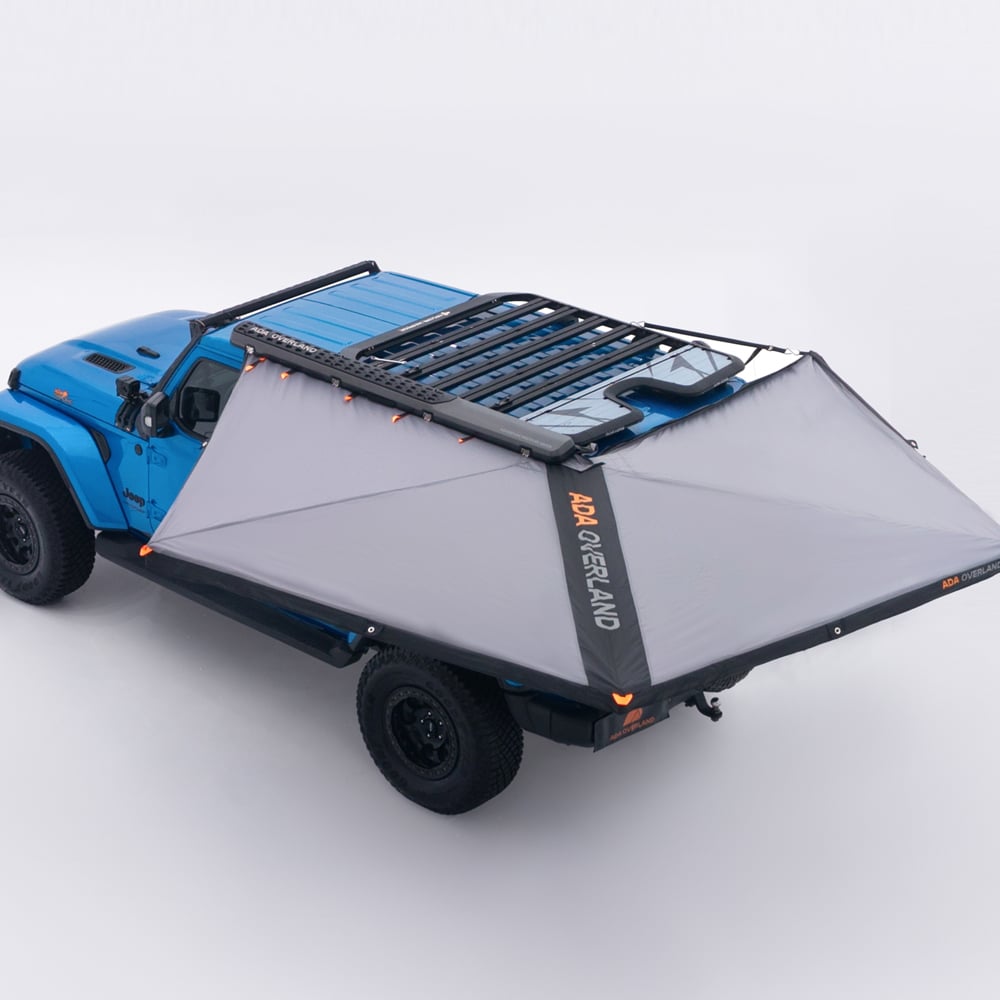
Before ordering any free standing awning, measure the exact distance between roof rack crossbars, the available length on the mounting side, and the vehicle's overall width including mirrors. An awning that fits between crossbars but extends 6 inches beyond the mirror on the passenger side creates a width hazard on tree-lined trails.
The published folded length of a free standing awning typically excludes the mounting brackets, which add 2-4 inches to the overall package length. Quick-release brackets add roughly 2 inches per side; fixed bolt-through brackets add 1 inch. For a vehicle with exactly 84 inches of available roof rail space, an awning listed at 82 inches with quick-release brackets will not fit without overhang.
A typical 270-degree free standing awning folds to 84×12×8 inches (214×30×21cm) and weighs 60-84 pounds. The length is the critical constraint — it matches mid-size SUV roof widths but overhangs compact crossovers significantly.
Smaller 90-degree and 180-degree free standing awning models fit inside most SUV cargo areas. 270-degree models at 84 inches require a vehicle with 80+ inches of cargo length with seats folded — typically full-size SUVs and trucks with bed caps only.
Aluminum-shell free standing awning housings add roughly 15 pounds compared to heavy-duty canvas carry bags for the same deployed size. Aluminum provides impact protection during off-road transport; canvas bags are easier to handle for roof-rack-free storage.
A roof-rack mounted free standing awning adds aerodynamic drag that reduces fuel economy by 3-8% at highway speeds, depending on vehicle profile and awning shape. A streamlined aluminum housing with rounded end caps creates less drag than a rectangular canvas bag.
90-degree and 180-degree free standing awning models at 25-48 pounds are manageable for single-person mounting. 270-degree models at 60-84 pounds require two people or a mechanical lift assist to position safely without damaging the vehicle roof or the awning housing.
A free standing awning requires at least 24 inches between roof rack crossbars for stable mounting. Spacing beyond 36 inches needs an adapter plate. Always verify bracket compatibility with the specific crossbar profile — some aero-shaped bars require profile-specific mounting clamps.
 Hot News
2026-09-15
2026-09-13
2026-09-06
2026-09-01
2026-08-24
2026-08-21

Zhejiang Ada Outdoor Products Co.,Ltd. provides premium rooftop tents and outdoor camping gear for global B2B partners. 8+ years, 60+ patents, strict QC. Trusted by international brands. Request OEM quote today.