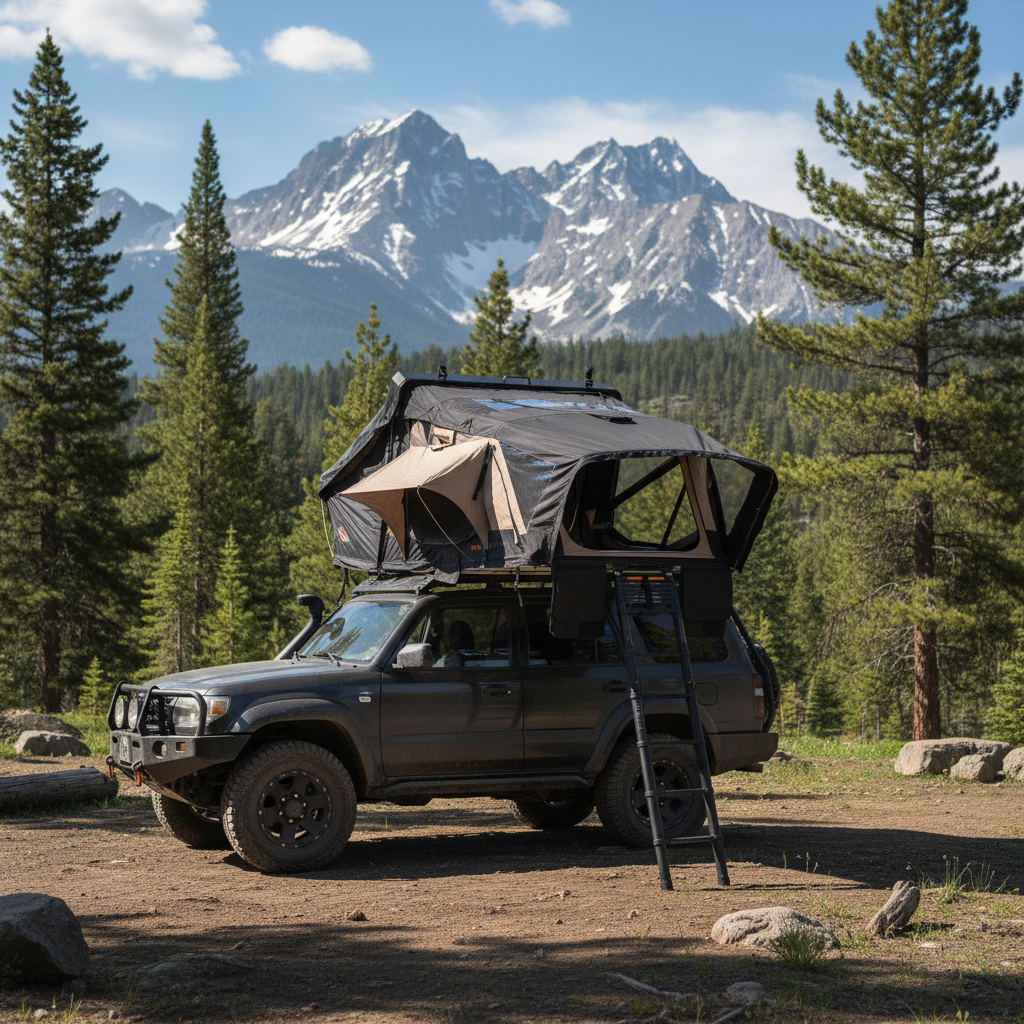
Wind stability stands as one core purchasing factor for overlanders who use hard shell rooftop tents on highways and storm-prone campsites. Many tent loosening, deformation and leakage issues in strong wind come from weak aerodynamic outlines, poor structural rigidity or unreliable mounting hardware. This complete guide breaks down wind load standards, streamlined design logic, structural material differences, authoritative testing certifications and balanced ventilation solutions, helping buyers pick windproof rooftop tents for long-distance outdoor travel.
Wind load rating refers to the maximum sustained wind speed that a hard shell rooftop tent is structurally built to bear. Most standard models carry a rating of 35–40 mph or 56–64 km/h, while heavy-duty off-road versions pass tests for gusts over 50 mph. All these data come from dynamic aerodynamic simulation and real vehicle road tests instead of simple theoretical calculation, so the data matches actual outdoor use scenarios perfectly.
Three elements decide real wind resistance performance including driving speed, crosswind angle and rooftop mounting tightness. Soft rooftop tents easily flap and deform under wind to amplify turbulence stress, while rigid hard shell units keep complete structural integrity, cutting stress pressure on seams and hinges effectively.
Formal manufacturers simulate highway driving and sudden side gusts to test crossbar connection stability, making sure wind pressure spreads evenly without generating continuous vibration that damages roof racks and tent accessories. Even premium hard shell tents can stand short 60 mph gusts, yet long-time exposure to strong wind leads to hardware fatigue and hidden safety risks. For users who often camp in stormy areas, matching high wind-rated tents with load-certified roof rack systems becomes a necessary safety guarantee.
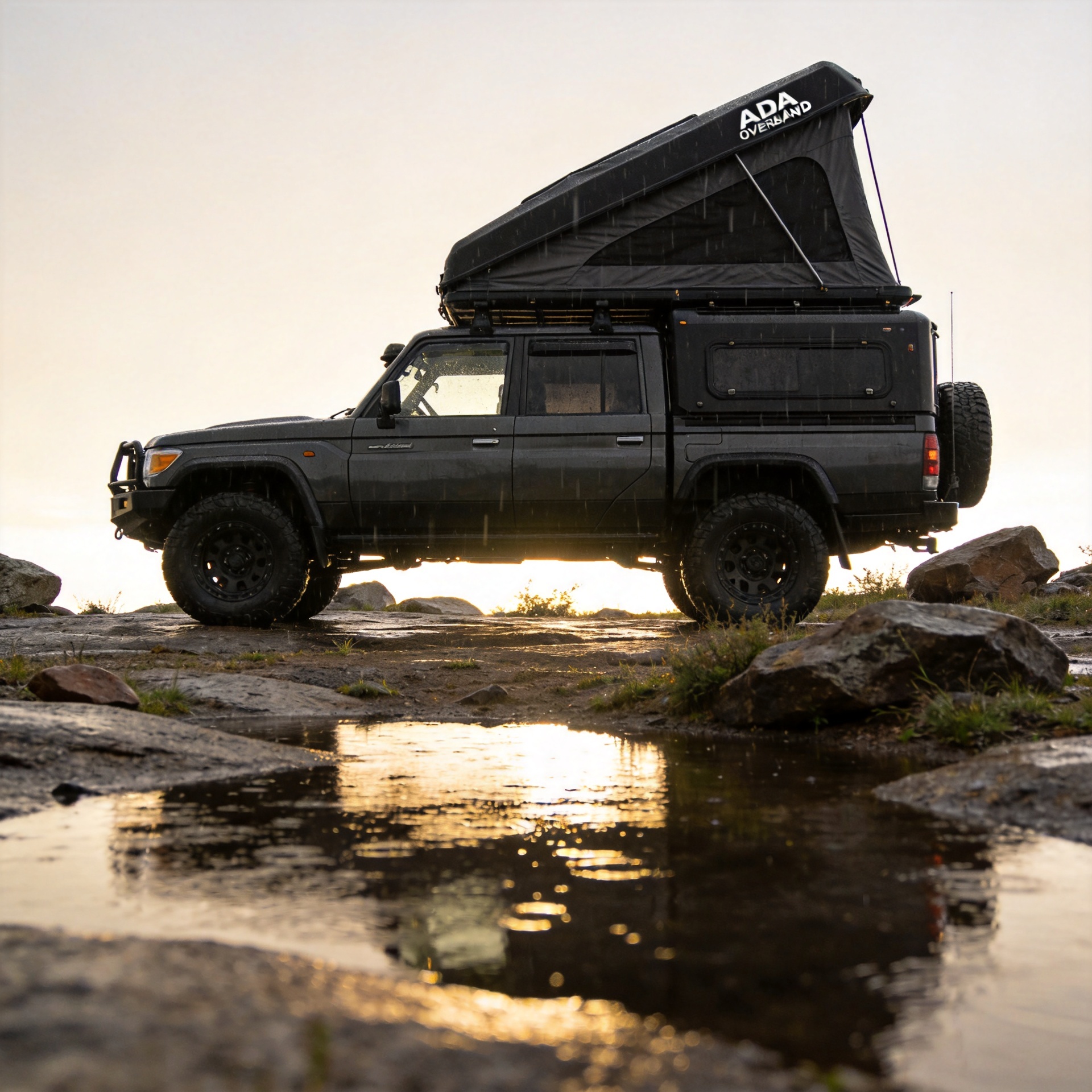
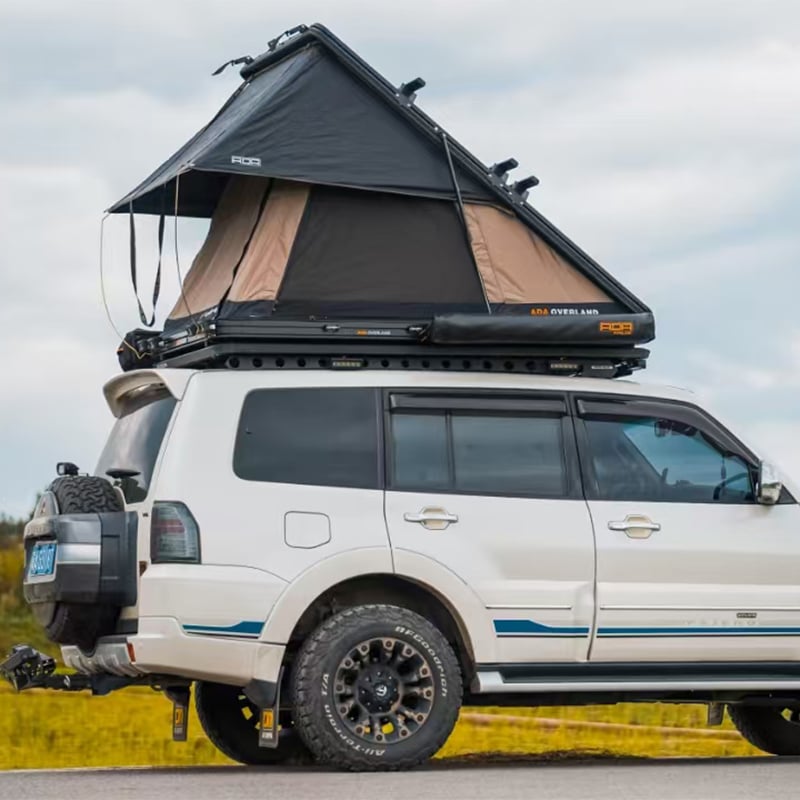
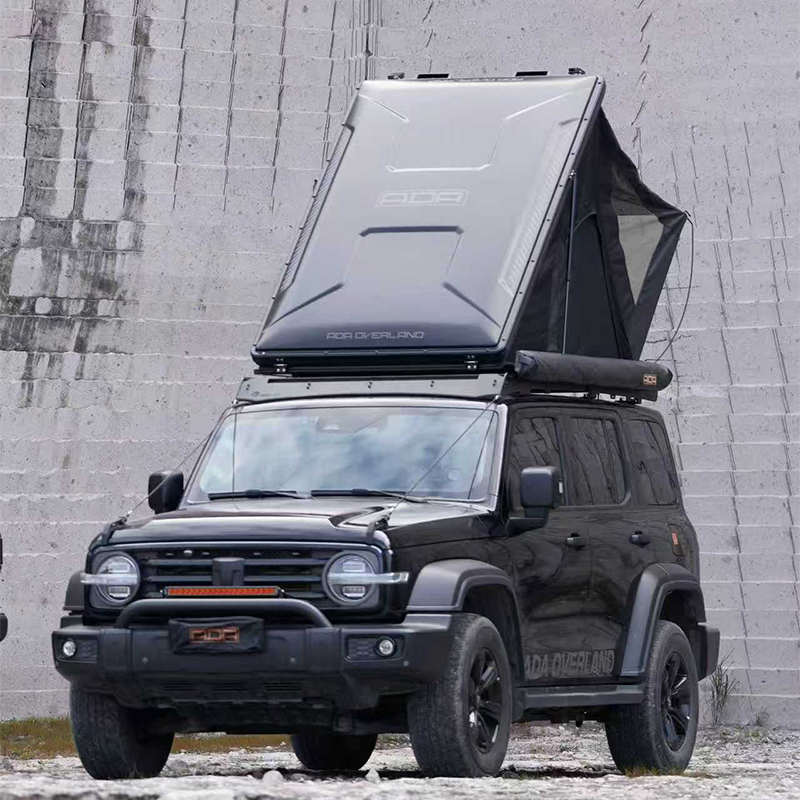
Optimized aerodynamic shape works as the most effective passive solution against wind uplift and extra fuel consumption. Hard shell rooftop tents adopt wedge-shaped and low-profile outlines to shrink frontal windward area and lower driving drag.
When fully closed, smooth sloped shell surfaces guide airflow to flow over the tent surface rather than hitting the front directly. This automotive-style streamline balances internal and external air pressure and eliminates wind uplift risks fundamentally. The rigid hard shell removes fabric flutter, which is the top cause of soft tent damage under strong wind.
Low center of gravity and close-fit mounting keep the tent inside the vehicle’s boundary layer where wind speed drops greatly. Integrated rounded front edges and hidden wind deflectors stabilize laminar airflow, maintaining stable performance on interstate roads without extra guy lines. Less wind drag also cuts vehicle fuel usage, bringing practical cost advantages for long-distance overlanding trips.
Structural Integrity Under Wind Load: Aluminum Frame and Composite Panel Comparison
The windproof performance of hard shell rooftop tents relies on core structural materials and overall integrated manufacturing. Two mainstream materials dominate the market with separate advantages in handling dynamic wind pressure.
6061-T6 aluminum alloy frames own outstanding strength-to-weight ratio and stable anti-fatigue performance with tensile strength reaching 310 MPa. High rigidity blocks lateral wind deformation and stops resonant aeroelastic flutter, protecting hinges and sealing strips from long-term vibration damage.
Reinforced composite panels made of fiberglass or honeycomb core ABS perform better on impact resistance and thermal insulation. Unlike rigid aluminum frames that resist wind force directly, composite panels absorb gust energy through slight bending. If internal rib support is insufficient, repeated cyclic wind load creates micro cracks on panels, shortening service life. Composite materials also face UV aging risks after long-term outdoor exposure.
Overall integrated monocoque structures outperform separate bolted panel designs greatly. When shell, frame and mounting base form one connected unit, wind force spreads evenly and avoids peel-off failure under dynamic lateral gusts.
Key Trait Comparison Between Two Main Materials
| Material Type |
Core Advantage |
Wind Load Performance |
Long-Term Service Life Feature |
| Aluminum Alloy Frame |
High tensile rigidity, anti-flutter |
Resist lateral deformation directly |
Coated surface prevents corrosion with stable fatigue resistance |
| Reinforced Composite Panel |
Strong impact absorption, good heat insulation |
Absorb gusts via flexible bending; easy to crack without thick ribs |
Prone to UV aging and material creep outdoors |
Mounting System Acts As The Critical Weak Point In High-Wind Conditions
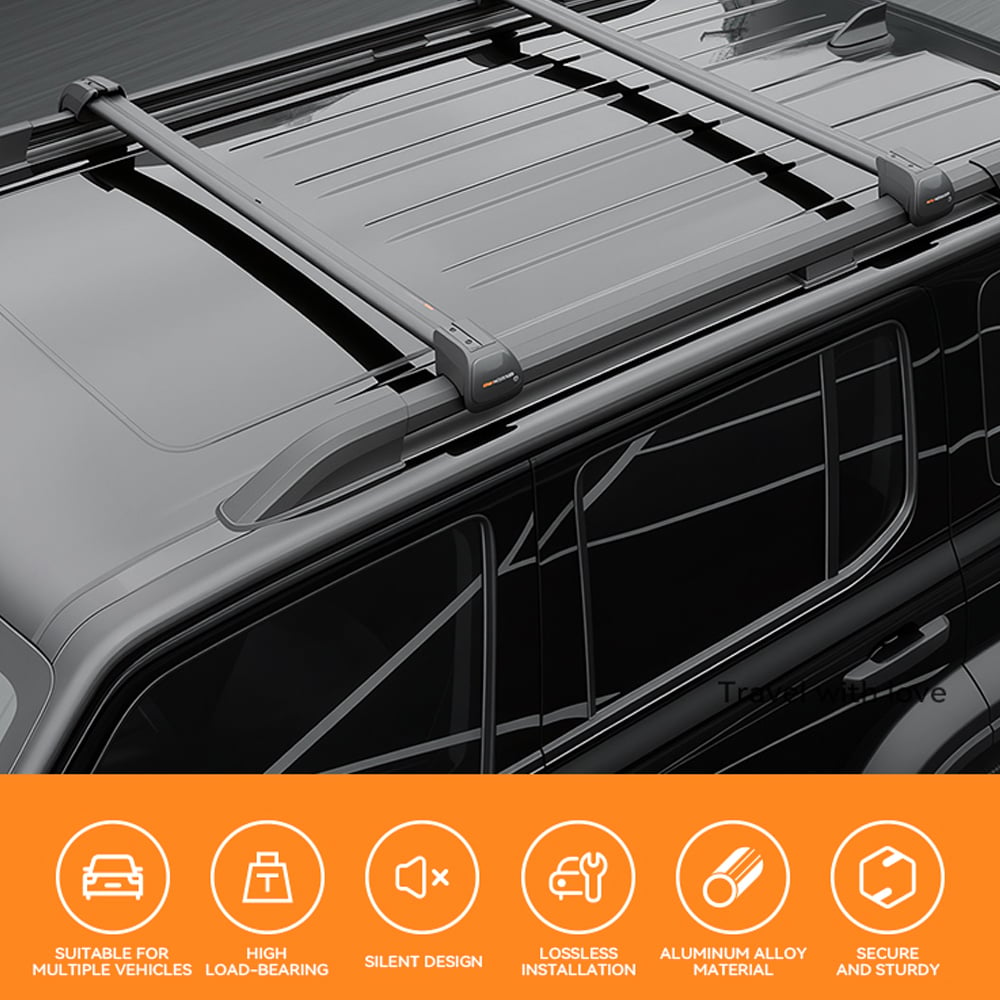
Perfect shell strength cannot offset risks from defective mounting systems, which cause most tent safety accidents in strong wind. Sudden side gusts create huge torsional force on mounting points, far exceeding static load bearing limits.
Ordinary crossbars and plastic clamps slide and rotate under lateral wind, concentrating pressure on small foot pads. This leads to cracked plastic roof rails and deformed car metal roofs without reinforced backing plates. Qualified windproof mounting systems build a complete load transmission path: wind force transfers from tent shell to mounting tracks, distributes evenly across crossbars and spreads on a wide area of the vehicle roof to avoid single-point overload.
The whole mounting assembly needs to operate as one integrated unit, resisting both shape deformation and full detachment under lasting wind pressure.
ASTM F3139 Certification: Authoritative Standard For Real Wind Resistance Test
Most tent brands only publish static load data or internal simulation results without third-party verification, which cannot reflect real performance under complex outdoor wind. ASTM F3139 serves as the exclusive unified standard designed for tent wind resistance inspection, requiring dynamic tests with changing wind directions, fluctuating air pressure and continuous gust impact to copy real camping environments.
A research paper released by National Wind Institute in 2023 proves ASTM-certified hard shell rooftop tents steadily bear 45 mph sustained wind and 55 mph gusts. Uncertified tents often break down under 35 mph wind even with exaggerated nominal wind resistance labels. Third-party certification tests the whole set including shell, hinges, seals and mounting brackets instead of single parts. Prioritizing ASTM F3139 certified products helps buyers stay away from over-marketed low-stability tents.
Balanced Waterproof Sealing and Ventilation Design For Windy Raining Weather
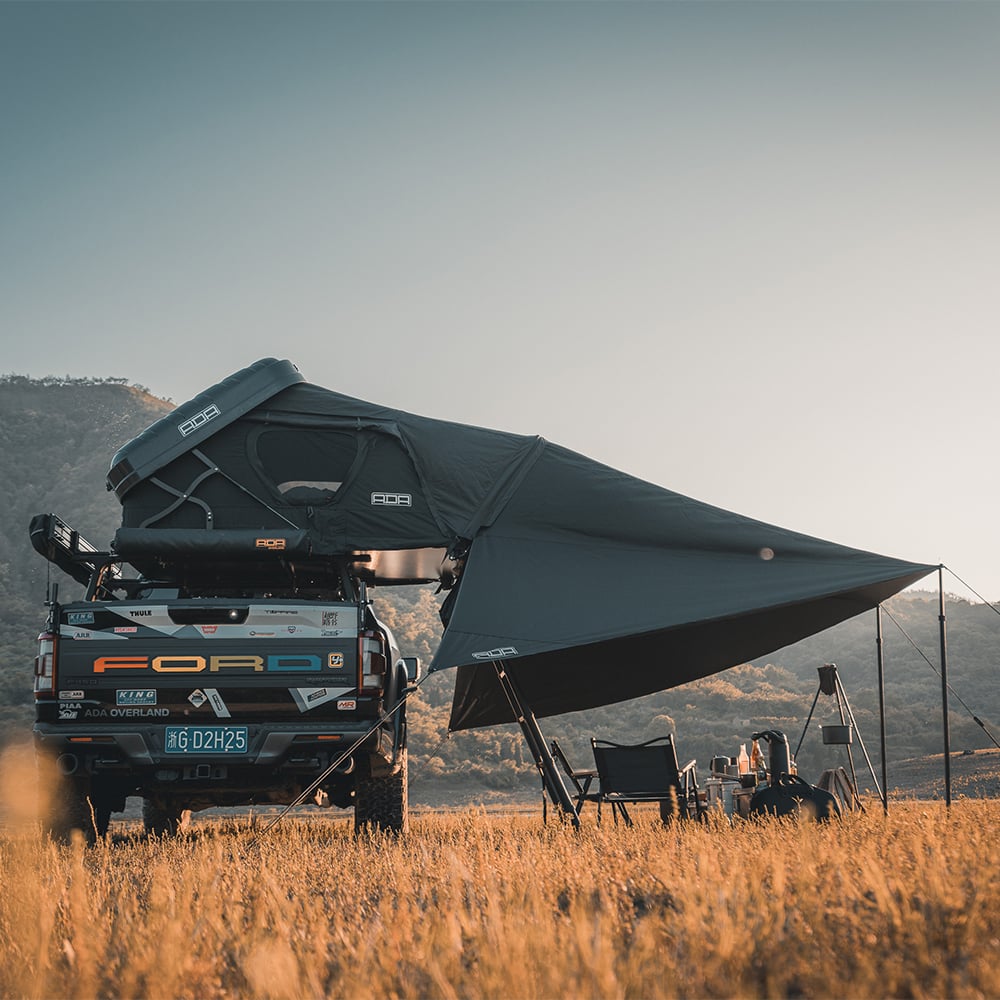
Long strong wind mixed with heavy rain raises dual requirements for tent waterproof performance and internal air circulation. Over-tight sealed structures trap moisture and create heavy condensation inside humid weather, while loose ventilation openings let rainwater pour in and weaken wind resistance.
Research from Tent and Awning Research Institute in 2023 shows optimized ventilation layout reduces internal moisture accumulation by up to 50%. Premium hard shell tents adopt dual-mode adjustable vents with storm sealing flaps. All outer vents fully close when wind speed hits above 30 mph to lock tight waterproof performance and block rain penetration. Built-in aerodynamic pressure balance channels equalize internal and external air pressure without bringing in rainwater. This integrated design balances storm resistance, waterproof sealing and breathable ventilation for all windy outdoor scenarios.
What wind load rating do standard hard shell rooftop tents carry
Common hard shell rooftop tents support sustained wind speed of 35–40 mph, while heavy-duty off-road versions can handle gusts over 50 mph for safe camping in open areas.
How does aerodynamic design improve wind resistance of rooftop tents
Low-profile wedge streamline shrinks frontal windward area, cuts wind drag and eliminates wind uplift. Smooth shell surface avoids fabric flutter and stabilizes airflow during high-speed driving.
Which material delivers better windproof performance for rooftop tent structures
Aluminum alloy frames provide stable rigidity to resist long-term wind vibration deformation. Composite panels absorb sudden impact better. Integrated monocoque design brings the best comprehensive wind resistance regardless of single material choice.
Why does the mounting system decide safety under strong wind
Side gusts generate large torsional force concentrated on mounting points. Standardized mounting hardware distributes load evenly to prevent slide, crack or full detachment of the tent.
What value does ASTM F3139 certification bring to tent buyers
ASTM F3139 is independent dynamic wind testing standard that verifies real-world wind resistance performance, filtering out untested products with exaggerated wind resistance advertising.
Final Takeaway
Reliable windproof hard shell rooftop tents rely on matched wind load rating, streamlined aerodynamic structure, high-strength integrated materials, balanced mounting load distribution and third-party ASTM certification. Unlike soft tents that rely on extra windproof accessories, hard shell models achieve stable anti-wind performance through original industrial design, creating safer highway driving and storm camping experience for all overland users.
 EN
EN

 Hot News