EN
EN


Are Free Standing Awnings Stable in Windy Outdoor Conditions?
As someone who has evaluated and tested dozens of outdoor shelter solutions across different terrains and weather conditions, wind stability is consistently the first practical question buyers ask — and rightfully so. A free standing awning that collapses at the first gust is not just inconvenient; it can be a safety issue. The short answer is yes: a well-designed free standing awning can be stable in moderate wind conditions, provided it is set up correctly and matched to the right environment.
But the longer answer involves understanding what "stable" actually means in practice — and that depends on construction quality, your setup method, and the wind speed you are working with.
What Makes a Free Standing Awning Different From a Wall-Mounted Model?
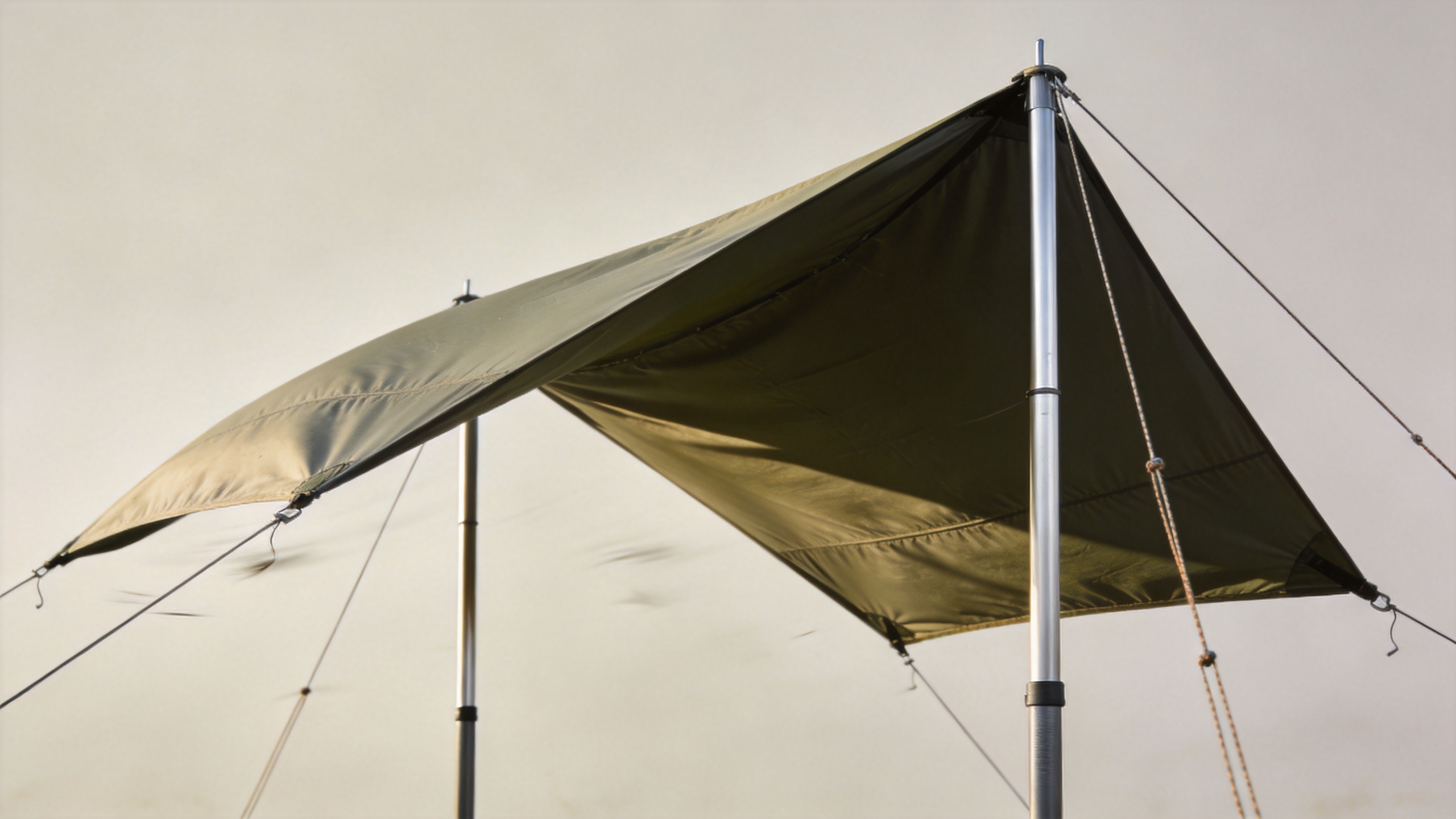
A free standing awning does not rely on a wall, vehicle, or permanent structure for support. Instead, it stands entirely on its own frame and poles, which means all the structural load (including lateral wind force) is distributed through those legs to the ground.
This design gives you placement flexibility that wall-mounted models cannot match. You can position a free standing awning anywhere at a campsite, in a garden, or on a patio without needing a nearby anchor structure. The trade-off is that wind resistance becomes more dependent on how the poles are loaded and how well the base is anchored.
How Much Wind Can a Free Standing Awning Handle?
So how do you actually know what wind speed a free standing awning can tolerate — not on paper, but in real conditions?
Based on field experience and community-reported data from overlanding and camping users, a baseline free standing awning without supplemental anchoring can comfortably handle sustained winds up to approximately 15 to 20 mph. Most standard retractable and freestanding awning models are rated to withstand 20 to 25 mph before they require retraction or additional support.
With proper staking, guy wires, and — where applicable — an attached wall panel to block lateral wind loading, a well-anchored free standing awning can handle winds up to around 30 mph according to overlanding community reports. That aligns roughly with the upper end of a fresh breeze on the Beaufort scale, which is typical for exposed campsites in open terrain.
Premium awning constructions tested in controlled wind tunnel conditions have been found to sustain winds above 50 mph without major structural failure — though that performance depends heavily on the anchor system and frame material, not just the fabric.
For reference, the European standard EN 13561 classifies external awning wind resistance into performance classes. The highest residential class under that standard covers winds up to 49 km/h (approximately 30 mph), which gives a useful benchmark for comparing products that carry formal certification.
Structural Factors That Affect Wind Stability
Wind stability in a free standing awning is not a single-variable question. Several structural elements interact to determine real-world performance.
Pole Material and Cross-Section
Aluminum alloy poles are the standard in quality free standing awning designs ; they offer a high strength-to-weight ratio without the corrosion vulnerability of lower-grade steel. What matters more than material alone is wall thickness and pole diameter. A 32 mm pole with a 1.5 mm wall thickness will flex and fail under sustained lateral load far sooner than a 40 mm pole with a 2.5 mm wall. When comparing free standing awning options, request the pole specification directly, not just the overall weight rating.
Staking and Guy Wire Systems
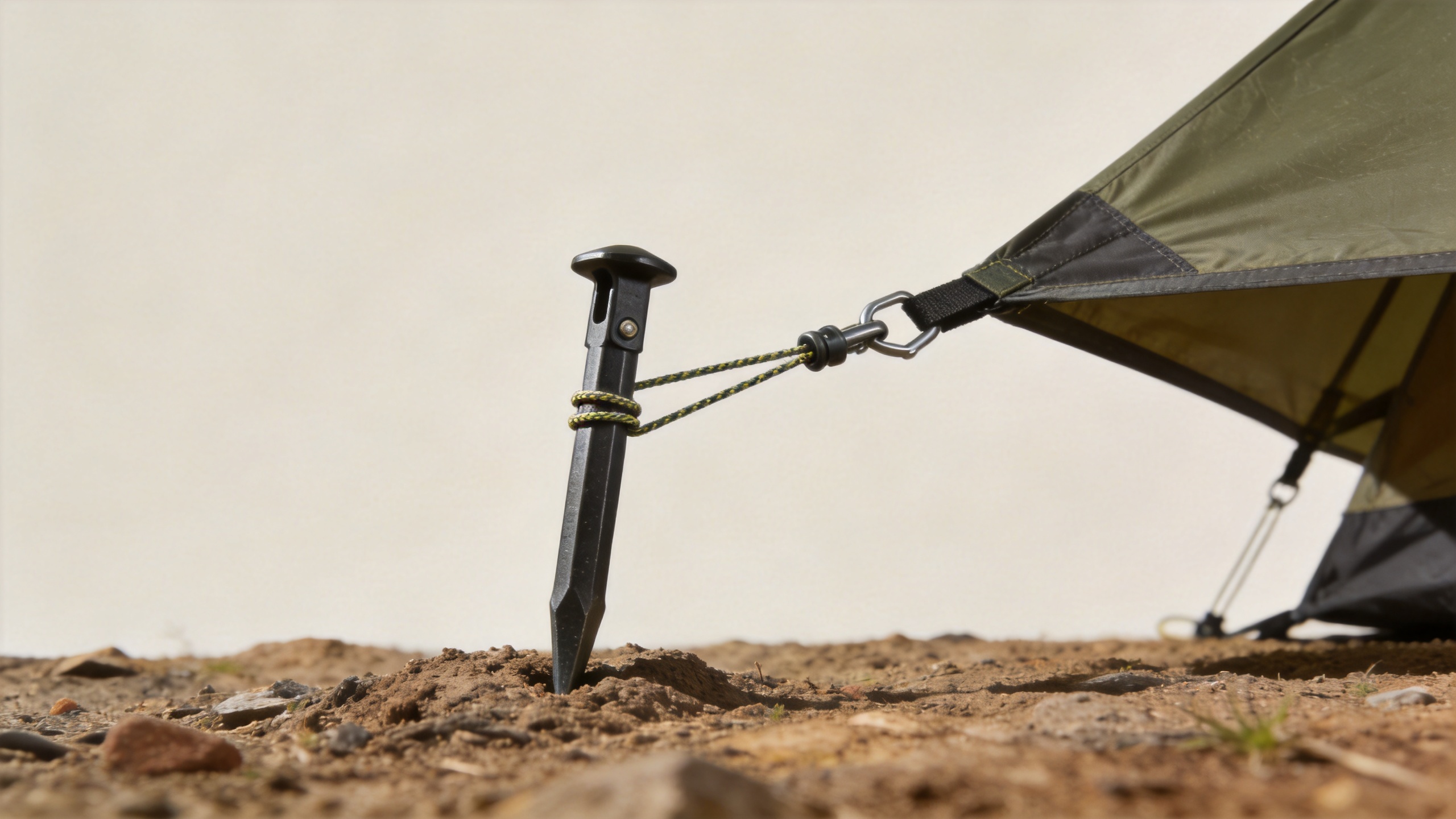
The single biggest gap between rated wind performance and field performance is anchoring. A free standing awning staked properly with heavy-duty pegs driven at a 45-degree angle and tensioned with guy wires can double the effective wind resistance of the same frame compared to operating without stakes.
For overlanding use, where campsites often involve compacted dirt, gravel, or rock, auger-style stakes or drive-through anchors perform significantly better than flat-plate stakes. If your free standing awning ships without dedicated staking hardware, that is a signal worth investigating before your first trip to a windy location.
Adjustable Leg Geometry
Free standing awning models with adjustable legs (typically ranging from roughly 47 to 90 degrees) allow you to level the canopy on uneven ground. This matters in wind because an off-level canopy creates asymmetric loading: one side of the frame takes more force than the other, which is how poles fail progressively rather than uniformly. Being able to set all legs at equal tension on uneven terrain is a structural advantage in wind.
Canopy Fabric and Seam Reinforcement
Wind load does not just push against the poles; it transfers directly into the fabric and the seam connections at stress points. Ripstop polyester with reinforced corner patches and bartack stitching at the pole pocket connections distributes that load more evenly than plain woven fabric with standard seam finishing. This spec difference rarely appears in free standing awning product descriptions, but it shows up clearly after a first exposure to sustained gusts above 25 mph.
Practical Setup Tips for Windy Conditions
Even a well-engineered free standing awning will underperform in wind if it is not set up with the conditions in mind. A few adjustments tend to make a consistent difference:
- Orient the narrow face into the wind. If your free standing awning has a rectangular canopy, position the shorter edge toward the prevailing wind direction. This reduces the effective projected area and lowers total wind load on the frame.
- Use all stake points, not just the corners. Mid-span stakes along the side edges reduce canopy flutter, which is the primary mechanism for stress concentration at seam corners and pole tops.
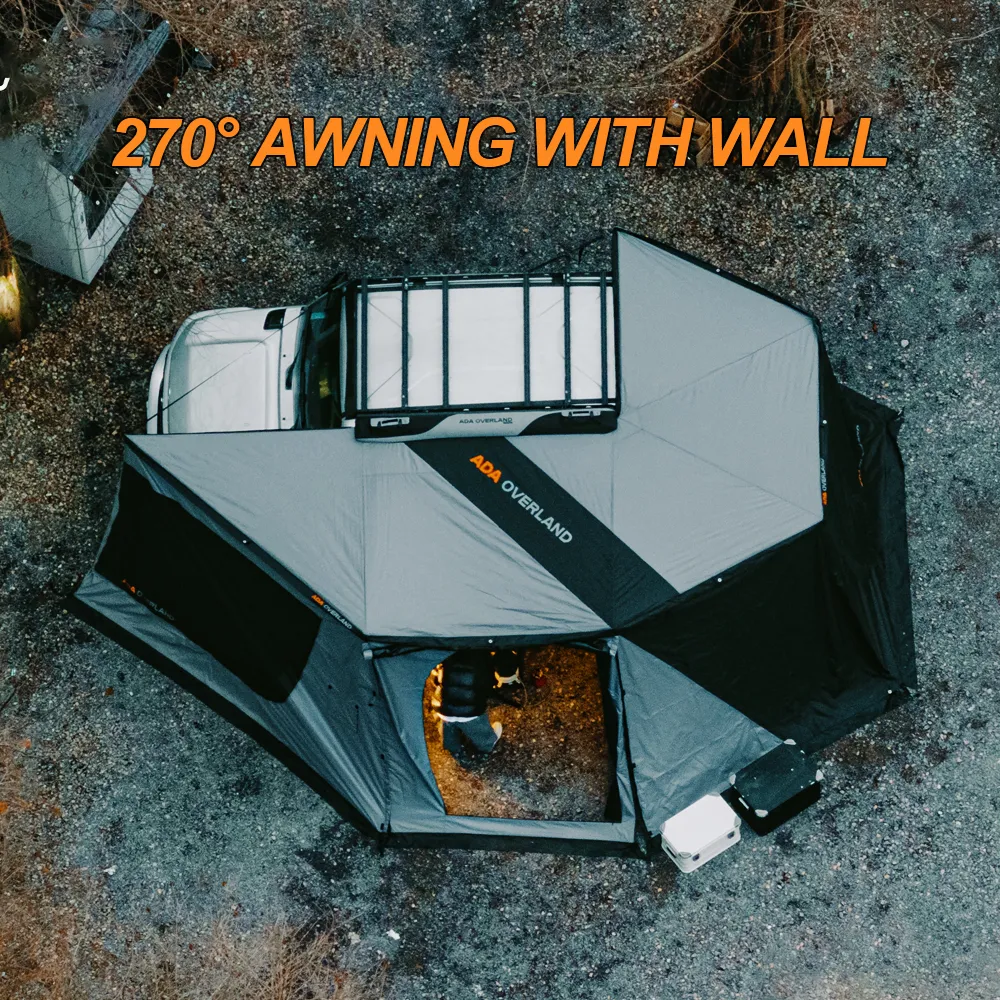
- Attach wall panels when available. Enclosing one or two sides with mesh or solid panels transforms an open canopy into a semi-enclosed structure that deflects wind rather than catching it. This setup method accounts for much of the performance difference between the baseline 15 to 20 mph rating and the 30 mph performance reported by experienced users.
- Lower the canopy height in sustained wind. Most adjustable-height free standing awning models allow you to reduce the pole height. A lower profile reduces the lever arm acting on the base anchors, which directly improves stability without any additional equipment.
- Re-tension guy wires after the first hour. Fabric and webbing connections relax slightly as the structure settles under load. Checking and re-tensioning guy wires after the initial setup period is standard practice for field use in variable wind.
When to Take a Free Standing Awning Down
The most important wind-stability question is not the maximum rated speed — it is knowing when to act before conditions exceed your free standing awning setup limits. In most camping and overlanding contexts, the practical guideline is: if tree branches above 20 mm diameter are moving actively and bending rather than just swaying, sustained wind is approaching or exceeding the 25 to 30 mph range. At that point, if you have not already staked and guyed the free standing awning fully, either complete that setup immediately or retract the canopy.
A fully deployed free standing awning left unattended — particularly overnight — should be staked and guyed regardless of forecast conditions. Wind patterns near hillsides, lake shores, and exposed ridgelines change faster than general weather forecasts suggest.
What to Look for When Choosing a Wind-Stable Free Standing Awning
If wind stability is a priority for your use case, the specification points worth checking before purchasing a free standing awning include: pole diameter and wall thickness, stake kit inclusion and hardware specification, adjustable leg range, seam reinforcement at connection points, and whether the canopy system accepts side wall attachments. A free standing awning product that addresses all five of these points in its technical documentation is more likely to perform as expected in real conditions than one that only quotes a maximum wind rating without supporting structural detail.
For buyers sourcing free standing awning options for overlanding or expedition use, the overlap between durable vehicle-mounted shelter design principles and ground-based free standing awning engineering is worth considering. Manufacturers with a background in high-load outdoor shelter systems — including experience with structural patents and multi-condition field testing — tend to apply more rigorous engineering to the pole-to-fabric connection points that matter most in wind.
In summary: free standing awnings are stable in moderate wind conditions when correctly chosen and set up. The gap between a collapsed awning and a steady one in 25 mph conditions is nearly entirely in the staking, the guying, and the wall panel usage, not in the free standing awning design itself.
 Hot News