EN
EN
What's the Difference Between Soft and Hard Shell Roof Top Tent?
Before actually shopping for a roof top tent on a longer trip, most people focus on price. After a few nights out, the thing that ends up dominating every setup decision is deployment speed and packed profile. The soft shell versus hard shell question sits at the center of that trade-off. Getting it wrong means either carrying a tent that fights you at every campsite or paying for convenience you did not actually need.
So how do you actually know which type fits your rig and travel style? The answer depends on four variables: how often you set up and pack down, your vehicle's roof load rating, your storage space at home, and your budget. This comparison walks through each criterion directly.
What Is a Soft Shell Roof Top Tent?
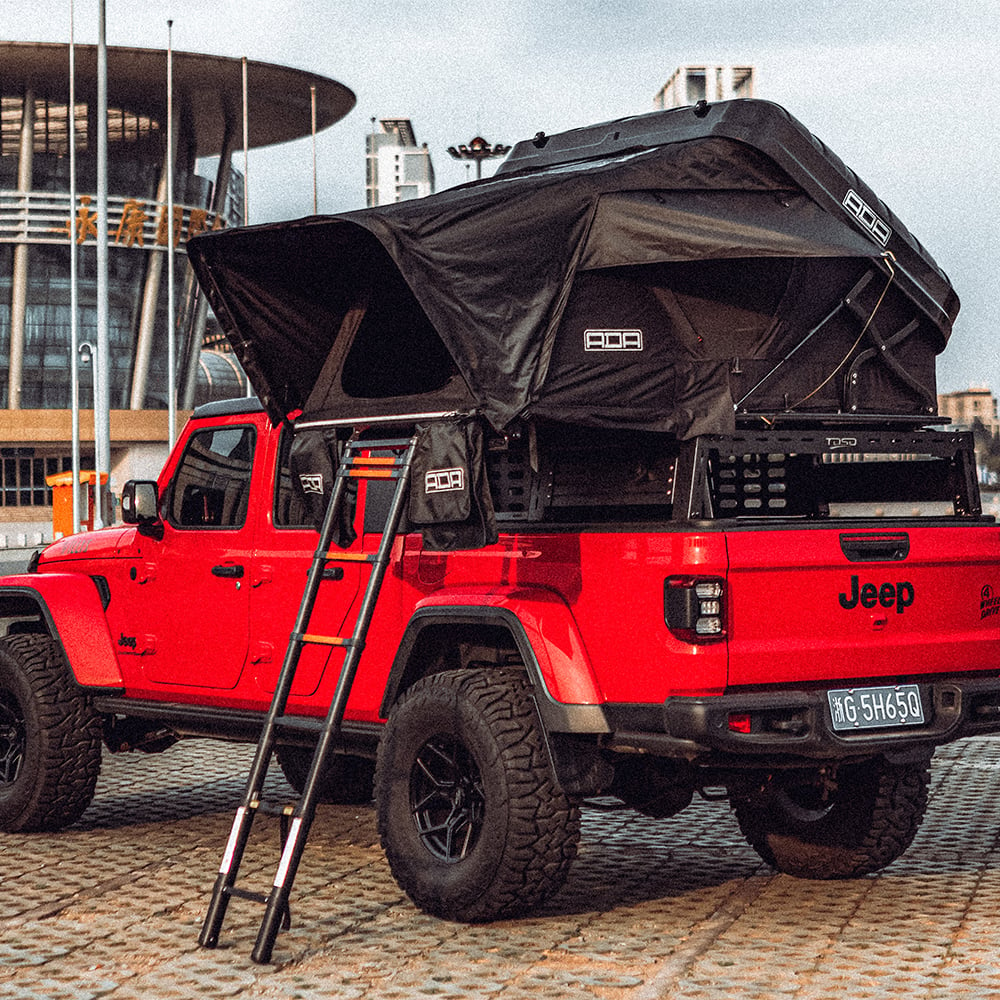
A soft shell roof top tent uses a folding design, typically hinged along one edge, that opens outward to reveal a fabric sleeping area supported by a pop-up aluminum or steel frame. The sleeping surface, walls, and rainfly are made from coated polyester or canvas. When closed, the unit packs flat against the roof rack, though the folded height is still larger than most hard shell designs.
Soft shell tents generally offer more interior volume once open and often come with a higher sleeping capacity per unit of cost. The fabric construction also makes them easier to customize for OEM partners who want specific materials, window placements, or functional add-ons.
What Is a Hard Shell Roof Top Tent?
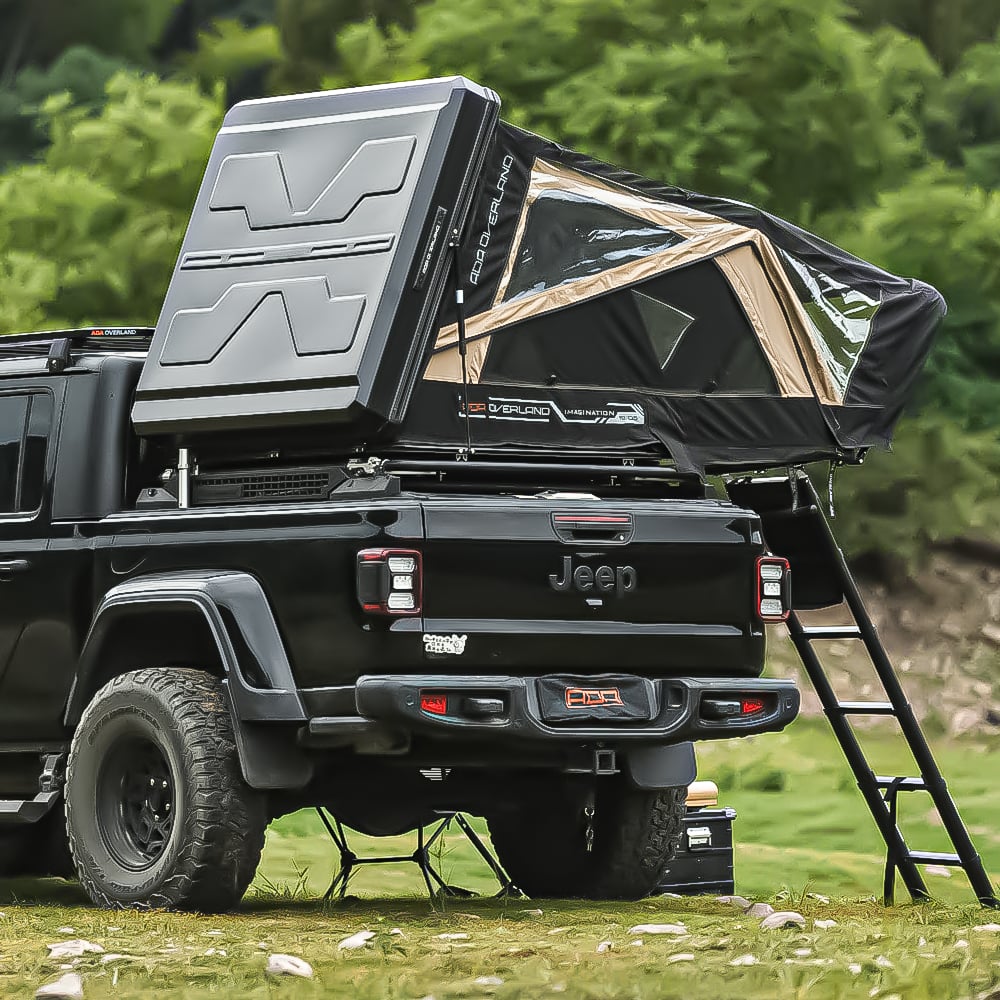
A hard shell roof top tent uses a rigid outer casing, typically fiberglass or aluminum, that opens either as a flip-up clamshell or a pop-up with a lifting lid. The structural shell protects the interior during transit and compresses the sleeping surface when closed. On the road, the sealed shell is inherently more aerodynamic and quieter than an exposed fabric pack.
Hard shell designs are engineered around the pop-open mechanism. When the latches release and the gas struts do their work, the tent is sleep-ready in under a minute (that said, dialing in the mounting hardware can take a few sessions).

Key Differences: A Side-by-Side Comparison
Setup and Packdown Speed
The gap shows up most clearly in real-world use. Soft shell tents typically require 5–10 minutes to fully open, adjust, and secure — manufacturer-quoted times are measured under ideal conditions. Hard shell models deploy in roughly 60 seconds or less. If you are moving camp daily or arriving after dark with cold hands, that time difference accumulates fast.
Packdown follows the same pattern. Soft shells require tucking the mattress, folding the fabric evenly, and closing the frame before latching — each step adds friction when you are tired or rushed. Hard shell packdown is typically the reverse of opening: fold the mattress protector, lower the lid, latch.

Weight and Vehicle Compatibility
Both types fall in a similar weight range — most roof top tents weigh between 45 and 90 kg. The key check is not tent weight alone but your vehicle's roof load rating and the crossbar system's dynamic load rating under highway conditions. A surprisingly common installation mistake is assuming any crossbar will support the load without verifying the dynamic rating specific to the vehicle's roof structure, which can result in roof deformation over time.
If your roof load rating is above 100 kg and your crossbars are purpose-rated, either type is viable. If you are working with a tighter rating, a lighter soft shell may give you more margin.
Interior Space When Open
Soft shell tents typically offer more usable interior volume for the same footprint. The fabric walls angle outward when open, increasing headroom and floor area. Hard shells, by contrast, are volume-constrained by the shell dimensions — a trade-off that keeps the packed profile low, at the cost of a less generous interior.
Buyers who prioritize standing room and extended stay comfort accept the larger packed profile of soft shell designs as a necessary cost. Conversely, those who prioritize aerodynamics and quick deployment typically end up compromising on interior headroom.
Weather Protection and Sealing
Hard shells have a structural advantage in sustained rain: the rigid casing sheds water before it reaches the seams. Soft shell weather performance depends on fabric coating quality, seam sealing, and how well the skirt perimeter is secured ; the most common waterproofing complaint is not about hydrostatic head ratings but about seam sealing at the skirt, which most buyers do not inspect before their first heavy rain.
In practice, a well-made soft shell handles most weather conditions adequately. The real hard shell edge comes in sustained wind-driven rain and long-term weatherproofing without ongoing seam maintenance.
Aerodynamics and Road Noise
Hard shells win here, clearly. The smooth, sealed profile reduces drag and keeps road noise manageable at highway speeds. Soft shells, even tightly strapped, introduce some wind resistance and can produce low-frequency noise from loose fabric edges at speed.
What does not show up in most product videos is how the packed soft shell behaves at sustained highway speed on long drives. The difference in fuel economy is real but modest — worth factoring in for buyers covering high annual mileage.
Price Range
Soft shell roof top tents typically start lower — directionally in the $900–$2,500 range — while hard shell models tend to run $2,000–$5,000 or more for quality-tier options. The upfront price difference often reflects the added engineering, materials, and mechanism precision in a hard shell, not just brand margin. Over multiple seasons of regular use, that gap can be offset by reduced maintenance and faster deployment.
Which Type Is Right for You?
Choosing between a soft shell and a hard shell roof top tent is not a quality question — it is a deployment frequency and storage question.
- If you move camp frequently, value solo setup speed, or drive long highway distances, a hard shell is the more practical choice.
- If you stay in one location for multiple nights, have a limited budget, or want more interior volume for family use, a soft shell offers better value per dollar.
- If your vehicle has limited roof load capacity or your garage has low clearance, a soft shell's lighter weight and lower packed profile can be the deciding factor.
- If storage in transit matters — fitting into a covered carport or reducing drag on long motorway sections — the hard shell's sealed casing is the better fit.
Neither type is universally better. The right choice depends on how you actually use the tent, not on which spec looks more impressive on a product page.
A Note on Manufacturing Quality
Across both categories, the differences between a well-made and a poorly-made roof top tent are rarely visible in product photos. ADA OVERLAND manufactures both soft shell and hard shell roof top tents for the overlanding market, with production focused on structural innovation rather than catalog repetition — backed by 60+ product patents covering hardware, mechanism, and material design. That range gives B2B buyers and brand partners access to both categories from a single supplier, with consistent QC standards across types.
If you are evaluating roof top tent options for import or OEM development, reviewing both roof top tent categories side by side against your actual market requirements — rather than defaulting to the category that appears more in current marketing — tends to produce better long-term product decisions.

 Hot News