


What is Roof Top Tent
A Roof-Top Tent is a type of portable camping tent that is mounted onto the roof of a vehicle, such as a car, SUV, or truck. It is designed to provide campers with a comfortable and elevated sleeping space while on outdoor adventures. Roof-top tents are easy to set up and take down and can be accessed through a ladder that is attached to the side of the tent. They come in a variety of sizes and styles and are becoming increasingly popular among campers and outdoor enthusiasts.
Why choose us?
Quality assurance
The company has passed ISO9001 quality system certification, and has obtained more than 40 national patent certification products and some international patent product certification.
Skilled employee
ADA currently has more than 180 high-quality employees with excellent professional ability.
Export countries
Its products are exported to Europe, the United States, and Australia, gaining the trust of its clients in more than 20 countries.
Technology and support
We can accept factory inspection and goods inspection at any time. Technical discussion, research and development of new products, and complete after-sales service.
-
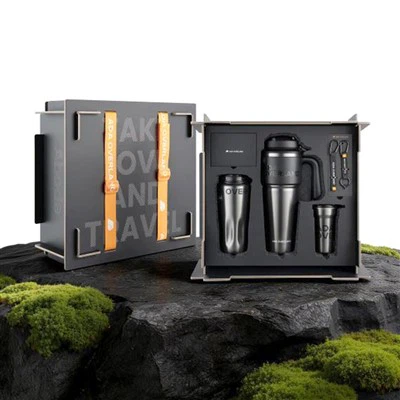
![Multifunctional Car Bottle Set For Camping Life]()
Multifunctional Car Bottle Set For Camping Life
Add to Inquiry -
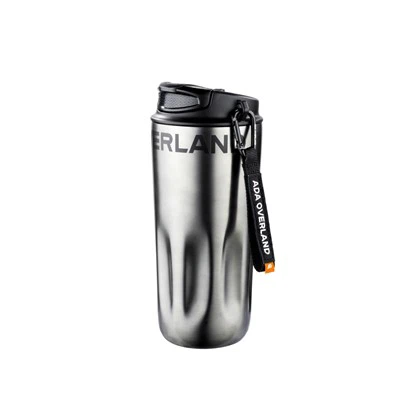
![Outdoor Cup Set (500ml+1000ml+200ml)]()
Outdoor Cup Set (500ml+1000ml+200ml)
Add to Inquiry -
![ADA 316L Stainless Steel Ice King Cup (1000ml)]()
ADA 316L Stainless Steel Ice King Cup (1000ml)
Add to Inquiry -
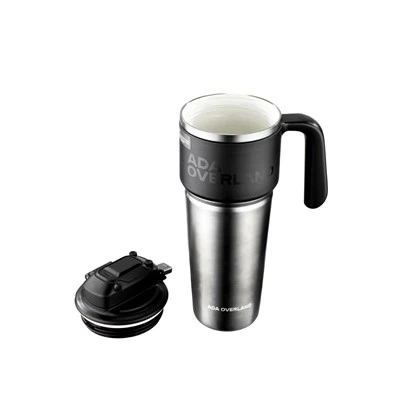
![ADA 316L Stainless Steel Coffee Cup]()
ADA 316L Stainless Steel Coffee Cup
Add to Inquiry -
![New Design Camping Cup Set]() Add to Inquiry
Add to Inquiry -
![Ada Overland UV Protection 4 Season Roof Tent]()
Ada Overland UV Protection 4 Season Roof Tent
Add to Inquiry -
![Lightweight Uv Waterproof Tent]()
Lightweight Uv Waterproof Tent
Add to Inquiry -
![Roof Top Tent Family Camping / Glamping / Overlanding]()
Roof Top Tent Family Camping / Glamping / Overlanding
Add to Inquiry -
![Roof Top Tent For Overlanding RTT]()
Roof Top Tent For Overlanding RTT
Add to Inquiry -
![4x4 Roof Tent Tente De Toit]() Add to Inquiry
Add to Inquiry -
![Outdoor Camping Car Roof Tent]() Add to Inquiry
Add to Inquiry -
![OEM Outdoorlive Roof Top Tent SUV/4X4]()
OEM Outdoorlive Roof Top Tent SUV/4X4
Add to Inquiry


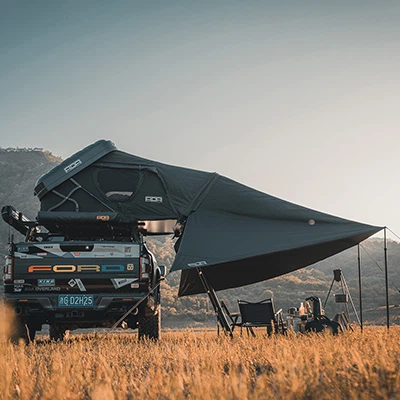
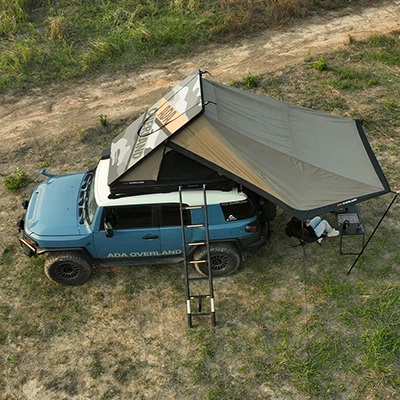
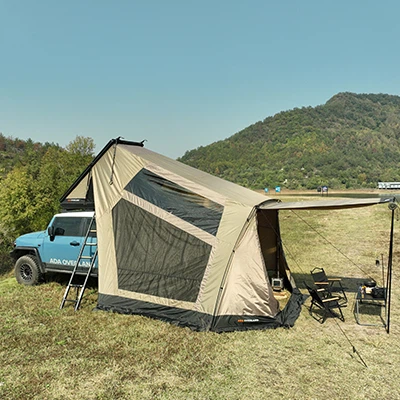

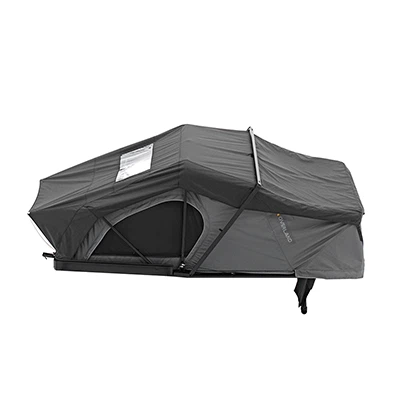
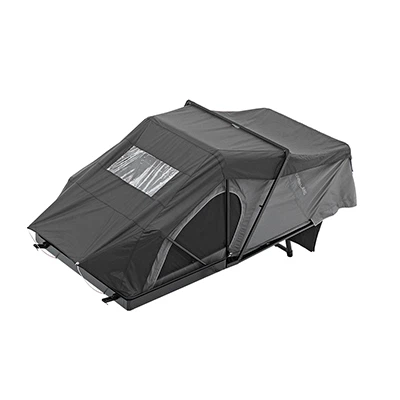
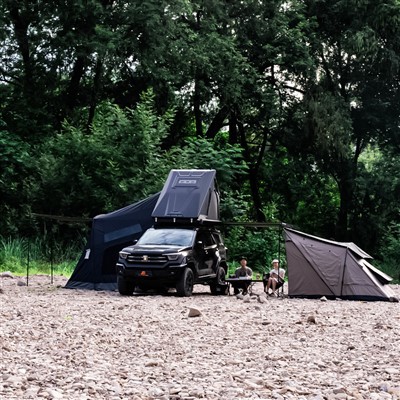
Today, most roof top tents practically pitch themselves, so even the most inexperienced camper can set up in under five minutes. Modern RTT designs feature gas struts to lift the tent shell once the latches have been released. Depending on the model, you may also need to unfold an expansion panel and deploy the ladder.
Roof top tents present many advantages over other options, most crucially how accessible they are. If you're still wondering what is the point of a roof top tent?
They remove intimidation barriers to camping because of their simple design and ease of setup. No specialty experience is required to hop in the car, drive to a campsite, and lift the latch on your tent.
They offer the opportunity to car camp while still sleeping under the stars in the fresh air of the outdoors. Many roof top tents feature a skylight which gives the experience another layer of romance.
The views are better. No need to imagine what the scenery looks like without the picnic tables and the neighboring camper's setup. From on top of your vehicle, you can bask in the views you drove out to see, entirely unobstructed.
Roof top tents free up storage space inside your vehicle, allowing your gear to be better organized without blocking the rear view or blind spots.
Roof top tents can go anywhere your car can go. This makes them especially popular for overlanding and dispersed camping because there's no trailer or bulky recreational vehicle to maneuver.
The average roof top tent includes a mattress that can be stored inside the tent, reducing the amount of extra gear to pack. (Goodbye cots and air beds!) Some RTTs have a generous enough shell that you can also store sleeping bags and pillows inside the tent between destinations, freeing up even more room inside the car.
Camping in a roof top tent offers greater comfort and convenience than a traditional tent and is a more affordable alternative to an RV or camper van.
They get you up off the ground. Quite literally. You won't need to worry about finding a level spot to pitch your tent. You also won't need to worry whether there are rocks or roots under your sleeping bag. You might even find there are fewer uninvited guests (of the critter variety) walking right through the tent door.
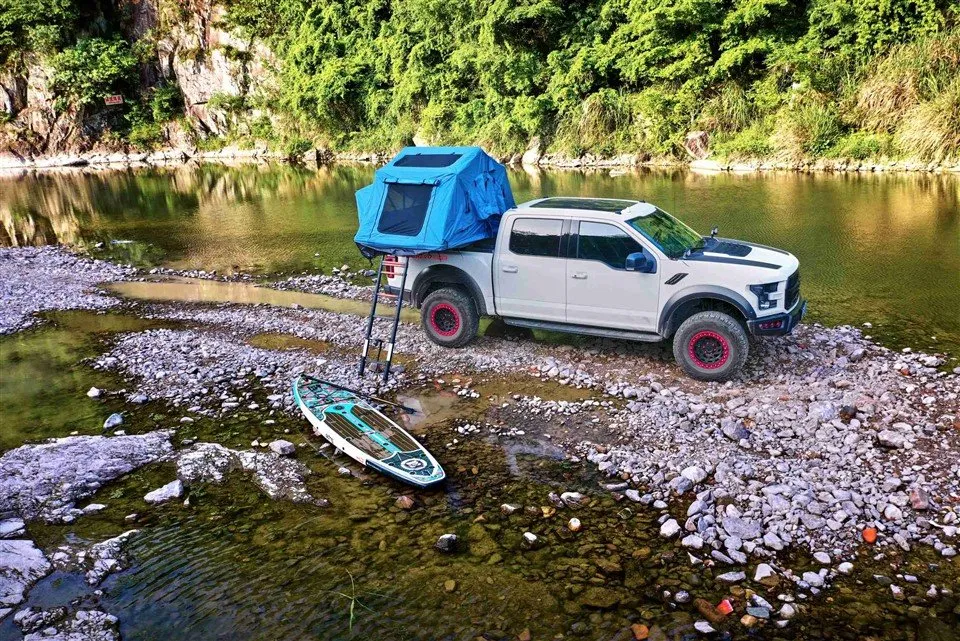
Just like tacos, when you buy a roof top tent you can choose between a soft shell and a hard shell.
Soft shell
A soft shell roof top tent is the most affordable option and it basically looks like a standard tent perched on top of your vehicle. It's lightweight and has the potential to be roomy enough for families. Although it's still quick, it's the slowest roof top tent to set up and pack up. Particularly when it comes to packing up as you have to walk around the car tucking all the little bits in and then try to wrestle the protective cover over the whole thing.
Hard shell – pop up
Hard shell pop up roof top tents are quick to set up and look like a big cargo box on top of your car when unpacked. They have either gas or spring struts that hold the walls taught so it's a little quieter in a storm. The hard top protects you from weather and drop bears… just kidding, nothing will protect you from a drop bear. Unfortunately, they are more expensive and less roomy than a soft shell roof top tent.
How to Choose a Roof Top Tent
Given that camping has been around since Homo erectus came down from the trees, it wouldn't seem like we have many innovations left in the art of sleeping under the stars. That said, roof-top tents, pitched atop their lofty perches, are getting double-takes from a lot of ground-dwelling campers these days.
- Pros and cons of roof-top tents: Quick setup vs. steeper cost are key considerations.
- How to know which tent works with your vehicle: Check tent, vehicle and rack specs carefully before you buy.
- How they attach to your vehicle: The floor bolts to your roof rack, so make sure you have an adequate setup.
- Additional considerations: Annexes, tent durability and shipping considerations are among the details you'll want to think about before you buy.
The Appeal of a Roof-Top Tent
Though roof-top tents have become a phenomenon in the U.S. in recent years, they've been around for decades, gaining greater popularity initially in places like Australia, where camping above the realm of creepy crawlies was instantly recognized as a genius idea.
Many roof-top tent owners today talk about how a high vantage point resonates with them on a primal level. Perhaps it's harkening back to childhood and a love of treehouses—or deeper in our psyches, when we slept in trees so we could survey our surroundings from a safe vantage point before drifting off to dreamland.
Pros of a Roof-Top Tent
- Pitching ease: It's engineered for quick setup. Once in camp, you undo a few straps, pop it open and deploy the poles and ladder.
- Beefy construction: Generally, the floor, tent fabric and pole materials are extra robust and able to withstand stormy weather.
- Comfort: Most come with a super-plush foam mattress.
- Camp anywhere: Set up in a campground, parking lot, remote dirt track, wherever.
- Camp above the ground: Keeps your tent floor clear of rainwater runoff, crawling creatures and rocks and sticks.
- Camp on the level: Strategically placed blocks or rocks under tires can help you keep things on an even keel.
Fitting a Roof-Top Tent to Your Vehicle
Most roof-top tents weigh more than a hundred pounds, so you need to be sure that your rack is up to the task. If you don't have a roof rack yet, then you'll need to consider your tent weight as you shop for a rack to serve as its foundation. The specs you need aren't always easy to find, so you might have to contact your vehicle manufacturer and rack manufacturer directly to get the information you need.
To check if a roof-top tent will work on your vehicle, look up the following information:
- Total tent weight: That should be in the tent's product specs.
- Car and rack dynamic weight capacity: This measures the ability to support that tent weight while you're driving. You need to verify this spec for both the vehicle and your roof rack. So if you're putting the tent on a separately purchased roof rack, you have to check your vehicle owner's manual for the roof's dynamic weight capacity and your rack owner's manual for that same spec.
- Rack compatibility: Check the owner's manual to be sure that your rack works with a roof-top tent. (Some racks/components are listed as "not compatible.")
- Static weight capacity: The ability of the rack (and vehicle roof) to support its designated number of sleepers and their gear isn't typically an issue. Most car roofs are already engineered to withstand loads relating to a rollover accident. Couple that with the load distribution provided by the sturdy tent-floor platform and extra support provided by the ladder, and you have one very robust structure. That said, you still need to confirm that the static weight capacity on your vehicle and on your rack will support the weight of your tent, plus everyone in it and their sleeping gear.
Attaching the Tent to Your Roof Rack
Though setup is a breeze once you drive your vehicle into camp, the initial process of bolting the tent to the roof rack will take some time. Read and follow all the provided installation instructions carefully. And you'll need at least one strong partner to be nearby because you'll need help to lift the tent up onto your roof rack.
Rooftop Tent Compatibility With Your Vehicle
Before purchasing a roof tent, it's essential to ensure compatibility with your vehicle. Here are steps to ensure the rooftop tent fits properly:
Roof load capacity: Check your vehicle's maximum roof load capacity to ensure it can support the weight of the roof tent and campers.
Roof rack or rails: Do you need a roof rack or roof rails to mount the roof tent? Ensure your vehicle is suitable for these mounting options.
Vehicle dimensions: Measure your vehicle's roof to determine the size of roof tent that fits without obstructing visibility or aerodynamics.
Installation and mounting: Make sure you understand how the roof tent mounts on your vehicle. Follow the manufacturer's instructions precisely.
Our Factory
Founded in 2018, Zhejiang Ada Outdoor Products Co.,Ltd. is a comprehensive modern enterprise specializing in designing, producing, and selling rooftop tents.In terms of guaranteed quality, ADA follows strict compliance with the standards and specifications of the ISO9001 quality system.

certificate

fAQ
We're well-known as one of the leading roof top tent suppliers in China, featured by quality products and good service. Please feel free to buy or wholesale customized roof top tent made in China here from our factory.
Car Shower Tent, Used Car Roof Tent, Rooptop Car