EN
EN
What Features Make ADA Tents Ideal for Off-Road Camping?
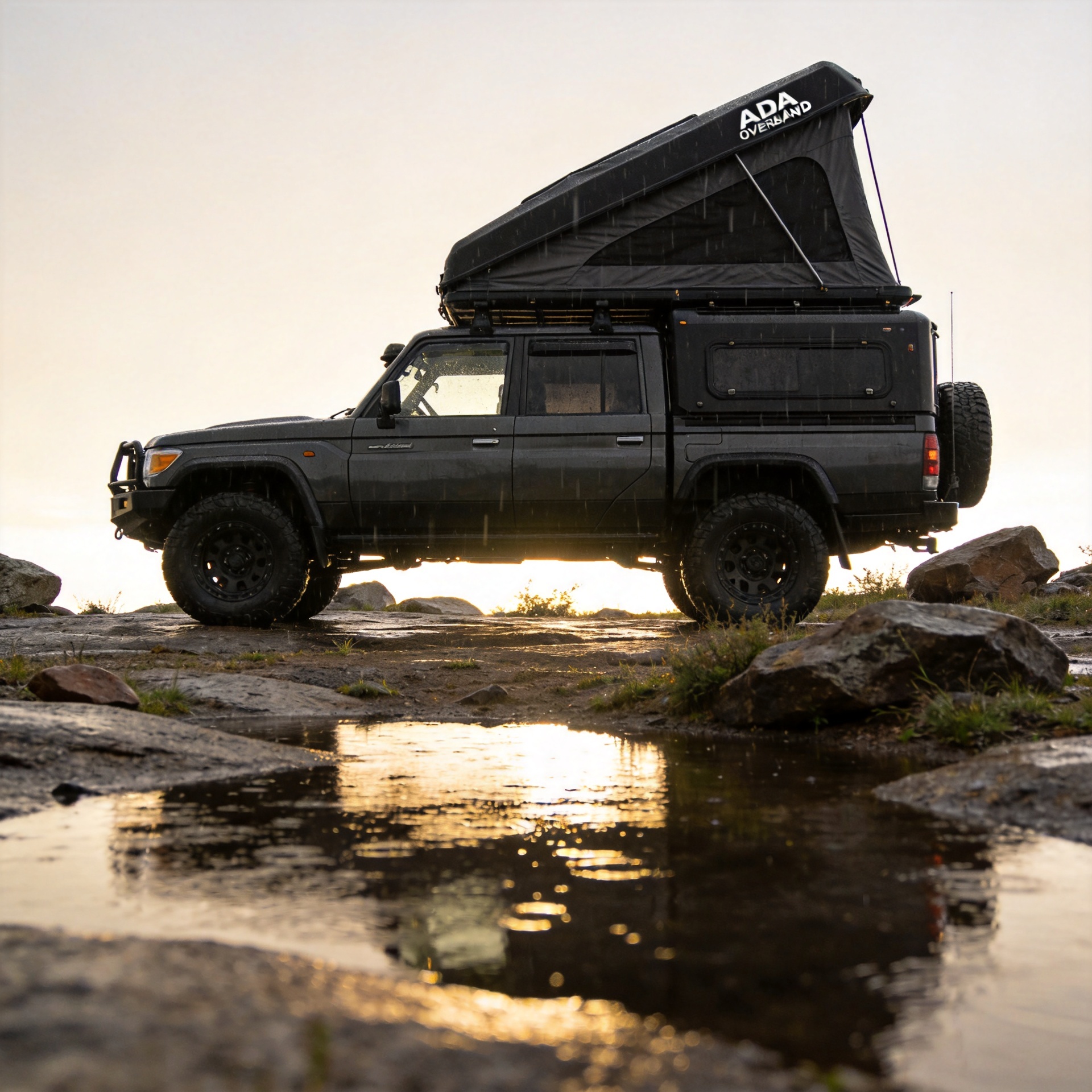
An ADA tent is designed for travelers who want their campsite to go where the road becomes rough, wet, dusty, or uneven. For off-road camping, the right roof top tent is not defined by one headline specification. It is a working system: the tent, the rack, the vehicle roof, the mounting hardware, and the person who sets it up all have to perform together. ADA OVERLAND focuses on roof top tents and outdoor gear, and its experience in this category makes an ADA tent worth assessing through real camp conditions rather than showroom impressions.
After enough weekends arriving late at camp, the detail that matters most is rarely the feature that initially looked most impressive on a data sheet. A tent can have an appealing load rating, but that does not explain how its mounts, fabric, access, and pack-down routine feel after a corrugated track and a rainstorm. The strongest case for an ADA tent is the way several practical features work together to reduce friction when conditions are less predictable.
1. A roof-mounted sleeping platform keeps camp above rough ground
Rocky, muddy, root-filled, or sloping ground can make a conventional ground tent difficult to pitch comfortably. An ADA tent places the sleeping area on the vehicle roof, so the condition of the campsite floor matters less than it would with a ground tent. That is especially useful when an off-road route ends at a small clearing rather than a level campground pad.
This does not mean that any parking spot is automatically suitable. The vehicle still needs secure footing, sufficient clearance for doors and ladders, and a safe place to stabilize the ladder. But elevating the sleep space can keep bedding away from surface moisture, puddles, and loose debris while making the camp routine more consistent from one stop to the next.
2. Vehicle and rack compatibility come before adventure claims
A capable ADA tent must be matched to a capable roof-rack setup. The key number for driving is the vehicle and rack system’s dynamic load rating, not just the static capacity available when the vehicle is parked. Dynamic load reflects what the roof carries while the vehicle is moving, including the tent and mounting system. It can be far lower than a parked vehicle’s static capacity.
Before fitting an ADA tent, confirm the vehicle manufacturer’s roof rating, the rack maker’s rating, crossbar or platform compatibility, mounting instructions, and the tent’s actual packaged weight. Check every fastener after initial use and periodically after vibration-heavy travel. The load rating on the data sheet can look compelling; what it does not capture is how repeated movement over corrugations, ruts, and washboard surfaces tests the complete installation.
3. Secure mounting and durable hardware support rough-road travel
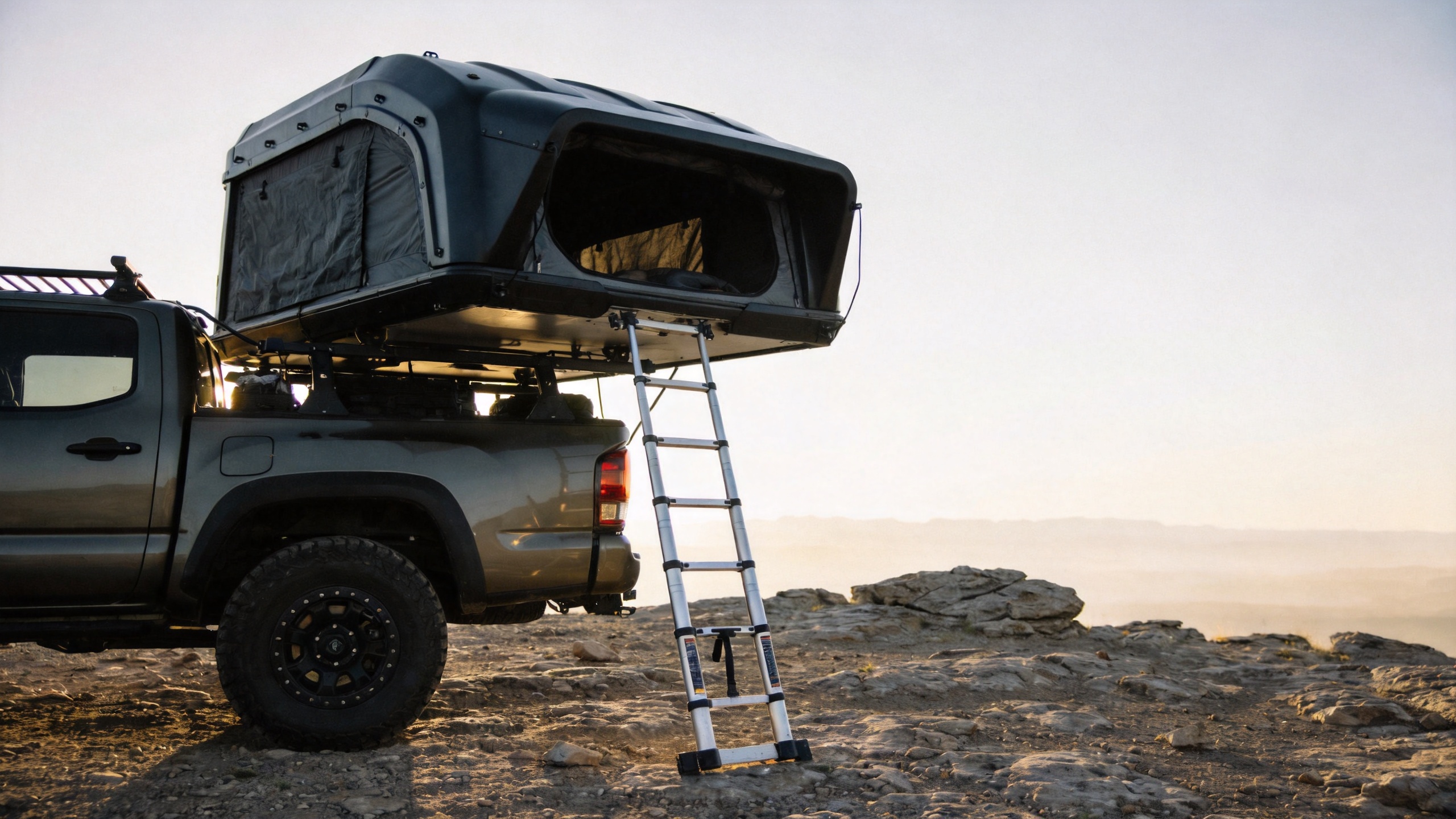
Off-road driving creates repeated vibration and shifting forces, so mounting design matters as much as the shell or fabric. The ADA OVERLAND variable library identifies locking hardware at connection points and reinforced mounting contact areas as relevant roof-top-tent design priorities. In practical terms, an ADA tent should be installed with the specified hardware, evenly supported by a compatible rack, and checked as part of a pre-trip routine.
Material choices also shape long-term confidence. ADA OVERLAND’s confirmed content materials include corrosion-resistant stainless-steel hardware for mounting and locking systems, a useful consideration for campers who encounter coastal air, humidity, dust, or frequent rain. These features should be verified against the model being considered, but the design principle is sound: field gear needs hardware that remains serviceable after repeated exposure, not merely after one dry weekend.
4. Weather management matters as much as waterproof fabric
Rain protection is essential, yet off-road comfort depends on managing moisture from both outside and inside the tent. The roof-top-tent materials available for ADA OVERLAND describe weather-resistant ripstop fabric with seam sealing as well as ventilation-panel design intended to maintain air circulation. Together, these features can make an ADA tent more suitable for variable weather than a shelter that only emphasizes a single waterproof claim.
Ventilation is particularly important when nights are cool, humid, or occupied by more than one person. Open vents and protected mesh areas when conditions allow, keep wet clothing out of the sleeping area where possible, and avoid sealing every opening unless wind-driven rain makes it necessary. An ADA tent with usable ventilation gives campers more control over condensation, although no tent can eliminate moisture if airflow is ignored.
5. Adjustable access helps when the campsite is uneven
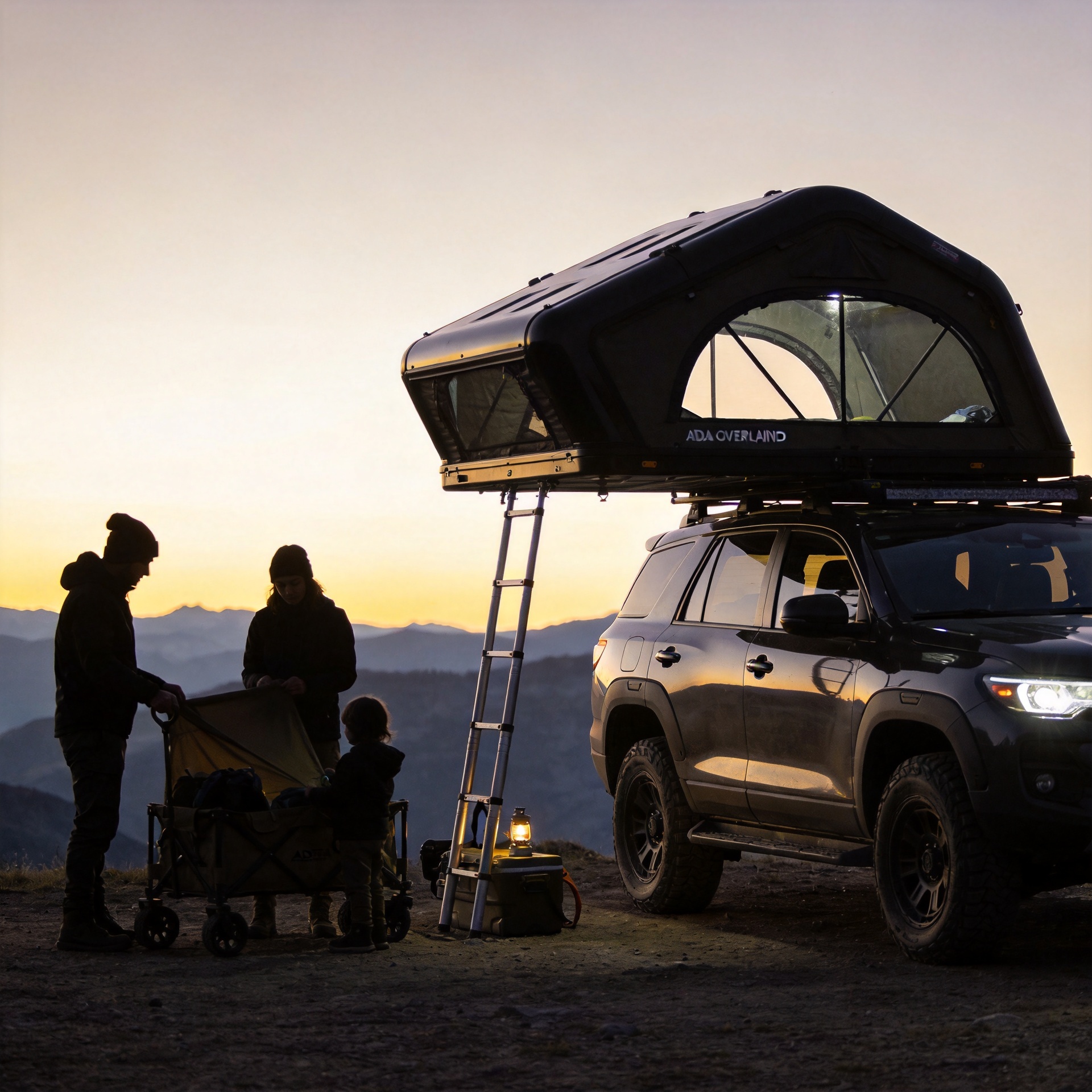
Off-road camps are rarely perfectly level. An adjustable telescoping ladder with anti-slip tread is one of the most practical features to look for in an ADA tent, because it can be adapted to different vehicle heights and uneven ground. The ladder needs a firm landing point and a stable angle; it should not be treated as a substitute for choosing a safe place to park.
For families, nighttime arrivals, or repeated in-and-out use, this feature becomes more important than it may appear in product photos. Take a moment to assess the ladder’s footing, make sure the vehicle is parked securely, and keep the entry clear. An ADA tent with thoughtful access design turns a basic safety check into an easier everyday habit.
6. Fast setup preserves energy after a long drive
One reason roof top tents appeal to overlanders is that they can reduce the number of campsite tasks after a long travel day. Some ADA OVERLAND hard-shell pop-up concepts use an auto-deployment mechanism intended to simplify single-person setup under standard conditions. A quick-opening ADA tent can be valuable when daylight is fading, weather is moving in, or camp is only a one-night stop.
Setup speed should not override careful inspection. Before leaving home, practice opening, closing, and securing the ADA tent; learn where fabric needs to be tucked during pack-down; and make sure the latches, struts, and ladder operate correctly. Fast setup is most useful when it is repeatable, not when it encourages rushing.
7. Comfort features help on multi-night routes
On a multi-night trip, small details accumulate. ADA OVERLAND’s content library includes high-density foam-mattress comfort, anti-condensation ventilation, non-slip sleeping-floor support, insect-screened openings, and entry storage as relevant tent features. Depending on the model, these features can make an ADA tent feel more livable when a trip includes several nights away from home.
Do not assume every ADA tent includes every feature. Ask for the current model specification, dimensions, weight, capacity, materials, and compatible accessories before choosing. If you change camps every day, quick deployment and packed height may matter most. If you stay in one place for several nights, ventilation, mattress comfort, access, and usable interior organization may deserve more weight.
8. Manufacturing focus can support more informed selection
ADA OVERLAND is an outdoor-gear and roof-top-tent manufacturer with OEM/ODM capability, more than eight years of sector experience, and a reported portfolio of more than 60 patents. Those credentials do not replace model-level verification, but they indicate a manufacturer focused on product development and the roof-top-tent category. For buyers evaluating an ADA tent for demanding routes, that focus can be relevant when asking technical questions about materials, mounting, specifications, or customization.
For a retailer, outfitter, or private-label partner, an ADA tent may also be worth discussing as an OEM/ODM platform. Clarify the exact requested configuration, sample-confirmation process, hardware finish, fabric, dimensions, and documentation needs before placing a production order.
A practical off-road checklist before you leave
- Confirm that the vehicle roof and rack’s dynamic rating safely supports the specific ADA tent and its mounting hardware.
- Use the manufacturer-approved mounting method and torque/inspection guidance.
- Practice opening, ladder adjustment, ventilation, and pack-down before the trip.
- Inspect mounts, fasteners, fabric, zippers, struts, and ladder contact points after rough-road travel.
- Choose a stable parking position and give the ladder firm, level support where possible.
- Verify the exact ADA tent model’s capacity, weather features, weight, and included accessories rather than relying on a category description.
The bottom line
An ADA tent can be a strong off-road camping choice when its roof-mounted design, secure fitment, weather-management features, adjustable access, and setup routine suit the vehicle and the trip. A sound choice is not simply the fastest-opening or toughest-looking tent. It is the specific ADA tent whose verified specifications match your vehicle’s limits, the terrain you drive, the climate you expect, and the way you camp.

 Hot News