EN


What Weight Capacity Roof Rack Is Needed for a Roof Rack Tent?
The short answer is: choose a roof rack tent setup whose dynamic capacity is within the lowest rating published for your vehicle roof, rack system, crossbars, and mounting hardware. There is no single safe rack capacity for every vehicle. A tent that works on a body-on-frame SUV may be unsuitable for a crossover with a much lower roof-load limit.
When evaluating a roof rack tent, start with the vehicle owner’s manual rather than the tent’s sleeping capacity. The number that controls driving safety is the dynamic roof-load rating: the maximum load allowed while the vehicle is moving. That load includes the rack, crossbars, mounting brackets, closed tent, and any other cargo carried on the roof.
Start With Dynamic Capacity, Not the Tent’s Occupant Rating
A common mistake is to see a tent advertised for two or three sleepers and assume the rack must support their combined weight while driving. Those are different measurements. The moving calculation concerns the hardware and cargo already on the roof. The parked calculation concerns the tent, people, bedding, and gear when camp is set up.
For a roof rack tent, use this driving formula:
Dynamic roof load = tent weight + rack/crossbar weight + mounting hardware + roof-mounted accessories.
That result must not exceed the lowest applicable dynamic rating. For example, if a vehicle roof is rated for 75 kg in motion, the rack is rated for 90 kg, and the crossbars are rated for 75 kg, the system is still limited to 75 kg before allowing for any manufacturer-specific restrictions. If the tent and rack together weigh 72 kg, there is little margin left for mounts, awnings, recovery boards, or cargo boxes.
Why Static Capacity Still Matters
Static capacity applies when the vehicle is parked. It is often higher than the dynamic figure because the load is no longer exposed to braking, cornering, bumps, wind, and vibration. However, “often higher” is not a permission to guess. Confirm whether the vehicle manufacturer, rack manufacturer, and tent maker publish stationary guidance for your exact configuration.
When checking a parked setup, account for the total sleeping load:
Static load = tent + rack + occupants + bedding + gear carried in the tent.
The tent’s ladder may transfer some force to the ground when it is correctly positioned, but it should not be used to justify exceeding a published roof or rack limit. Uneven ground, a poor ladder angle, and a partially extended ladder can change how forces move through the setup. Treat the manufacturer’s instructions as the governing source.
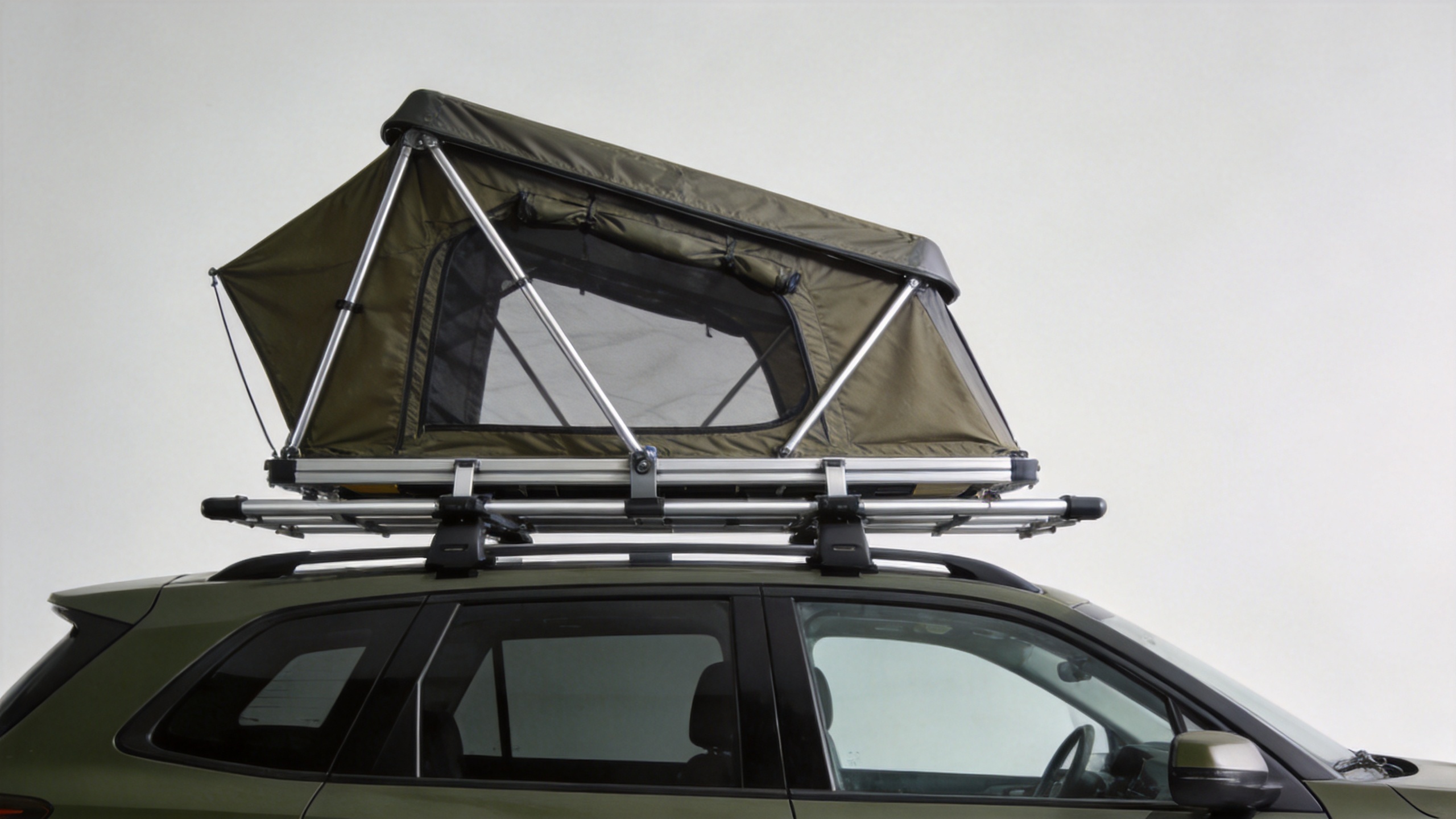
Which Rating Governs a Roof Rack Tent?
Think of the installation as a chain. Its capacity is controlled by the weakest verified component, not by the biggest number in an advertisement. Check these four limits before buying:
- Vehicle roof dynamic rating. Find it in the owner’s manual or obtain written confirmation from the vehicle manufacturer.
- Rack or platform rating. Confirm that it is intended for a roof rack tent, not merely light recreational cargo.
- Crossbar rating and spacing. The bars must be compatible with the tent’s mounting rail layout and the rack maker’s installation rules.
- Tent and mounting instructions. Follow stated bar count, bar spacing, orientation, fastener torque, and any vehicle exclusions.
If one component has a lower published rating, that lower number governs. If a rating is missing, unclear, or applies only to a different rack configuration, pause the installation and obtain clarification rather than assuming compatibility.
Do Not Confuse a Strong Rack With a Suitable Vehicle Roof
Many fitment errors begin with a sturdy-looking rack. A robust rack can distribute load well, but it cannot automatically raise the capacity of the vehicle roof, factory mounting points, or door-frame clamps beneath it. Likewise, high-capacity crossbars do not override the vehicle manufacturer’s dynamic limit.
This distinction matters most with heavier hardshell designs. A compact roof rack tent may fit comfortably inside a vehicle’s moving limit, while a larger model can consume nearly all of that allowance before the rack itself is counted. The right choice is not necessarily the lightest tent; it is the tent whose confirmed installed weight leaves a sensible margin below every applicable limit.
Allow Extra Margin for Real Driving Conditions
Published dynamic ratings are not targets to load exactly. Road impacts, emergency braking, crosswinds, and rough surfaces increase the demands on the rack, fasteners, and roof attachment points. Some rack manufacturers give separate or reduced guidance for off-road use. If you drive corrugated tracks, forest roads, or trails, check that guidance specifically; an on-road number may not apply unchanged off pavement.
Also consider what stays inside the closed tent. A mattress may remain in place, but loose gear, water, or accessories can turn a seemingly acceptable roof rack tent calculation into an overloaded one. Weigh the real installed package rather than relying on a product-page figure that may exclude mounts, ladders, covers, or optional accessories.
A Practical Pre-Purchase Checklist
- Record the vehicle’s exact dynamic roof-load rating.
- Get the installed tent weight, not only the bare shell weight.
- Add the rack, crossbars, brackets, locks, and any permanent roof accessories.
- Compare the total against each published dynamic limit and use the lowest value.
- Confirm crossbar spacing, mounting method, and tent compatibility in writing when possible.
- Verify the parked/static guidance separately for occupants and sleeping gear.
- Recheck fasteners after the first drive and at the service intervals specified by the manufacturers.
Bottom Line
The roof rack capacity needed for a roof rack tent is not a fixed 75 kg, 100 kg, or 165 lb number. It must safely exceed the complete moving roof load, while remaining within the vehicle, rack, crossbar, and tent manufacturers’ instructions. Then verify the separate stationary load guidance for camping. Taking those two calculations seriously protects the vehicle, helps preserve handling, and gives you a much sounder foundation for a comfortable night above the ground.


 Hot News