
Get a Free Quote

Our representative will contact you soon.
Email
Name
Company Name
Message
0/1000

Can overland roof top tents be used in cold climates?

Jul 25, 2026

The Physics Problem That Cold Weather Creates Inside a Tent

A rooftop tent at 25°F with two occupants inside faces two opposing forces. Body heat — roughly 200 watts per person — warms the interior air. The aluminum shell and fabric walls, in direct contact with 25°F outside air, conduct that heat away as fast as the occupants produce it. The result, without intervention, is an interior temperature that stabilizes around 10-15°F above ambient — cold enough that condensation freezes on interior walls and sleeping bag loft compresses under its own moisture.

Overland roof top tents designed for cold climates do not attempt to heat the outdoor air. They manage three variables that determine cold-weather livability: insulation value at the sleeping surface, condensation control through ventilation management, and thermal bridging through the tent structure. Getting any one of these wrong makes the other two irrelevant.

How Insulation Works in a Compact Sleeping Platform

The Sleeping Surface Is the Critical Heat-Loss Path

Heat loss through conduction — body heat transferring directly into a cold sleeping platform — accounts for roughly 60% of total heat loss in a rooftop tent below freezing. A 6cm high-density foam mattress provides an R-value of approximately 3.5-4.0, adequate for temperatures down to 30°F. Below 20°F, a closed-cell foam pad placed beneath the mattress adds R-2.0-2.5, creating a total R-value sufficient for single-digit temperatures.

The mattress cover material matters as much as the foam density. A flannelette cover on overland roof top tents retains surface warmth better than calendered polyester because the brushed fibers trap a thin layer of warm air against the sleeper's skin. The difference in perceived warmth between flannelette and smooth polyester at identical foam density is roughly 5-8°F of comfort range — the difference between sleeping through the night and waking at 3 AM.

10.jpg

Honeycomb Flooring and Thermal Bridging

The tent floor is the largest uninterrupted cold surface in overland roof top tents. Aluminum honeycomb flooring panels — a sandwich of two thin aluminum sheets bonded to an aluminum honeycomb core — provide structural rigidity at half the weight of a solid aluminum panel. The honeycomb structure also breaks the direct thermal conduction path: air trapped in the hexagonal cells adds roughly R-1.5 of insulation value compared to a solid aluminum floor of equivalent thickness.

The thermal bridging occurs at the floor-to-wall junction, where the aluminum floor panel contacts the exterior shell without an insulating gasket. A 3mm closed-cell foam gasket at this junction reduces heat loss at the perimeter by approximately 30%, preventing the cold stripe around the tent perimeter that occupants feel through sleeping bags pressed against tent walls.

Condensation: The Cold-Weather Enemy Inside

Why Condensation Is Worse in Cold Weather

Two occupants exhale roughly 1.5 liters of water vapor overnight. At 25°F, the dew point inside overland roof top tents is reached within minutes of the tent being sealed. The water vapor condenses on any surface below the dew-point temperature — typically the aluminum shell, the tent walls, and the zipper tracks. At 25°F, this condensation freezes, forming a layer of frost on interior surfaces that melts when the tent warms above freezing the next morning, dripping onto sleeping bags.

The solution is not more insulation — it is managed ventilation. A vent positioned at the tent's highest point allows warm, moisture-laden air to escape before it reaches the cold shell surface. A second vent at a lower position draws in drier outside air. This passive chimney effect works without power and reduces interior condensation by 40-60% compared to a fully sealed tent under identical conditions.

The Optional Warm Inner Tent

A quilted thermal inner tent — available as an accessory for some overland roof top tents — adds a suspended fabric layer between the occupants and the tent shell. The air gap between the inner and outer layers provides roughly R-1.0 of additional insulation, and the inner layer's surface temperature stays several degrees warmer than the bare shell, reducing the condensation surface area where moisture can collect.

The functional trade-off: an inner tent reduces interior volume by roughly 15-20%, and installation adds 5-8 minutes to setup time. For temperatures consistently below 20°F, the insulation benefit outweighs the space and time penalties. For temperatures between 20-32°F, managed ventilation without an inner tent is typically sufficient.

Material Behavior at Low Temperatures

Fabric Flexibility and Zipper Function

Polyester cotton fabric on overland roof top tents remains flexible at temperatures down to -20°F. Nylon fabric stiffens noticeably below 10°F, making folding and stowing the tent body difficult with cold hands. PU coatings become less flexible below 0°F but do not crack if the fabric is folded gently rather than forced.

Zippers are the cold-weather failure point most often overlooked. Standard coil zippers bind when frost accumulates between coil loops. SBS-branded zippers with silicone-impregnated coils resist frost adhesion because water cannot bond to the silicone surface — ice crystals slide off rather than accumulating. The difference between a silicone-treated zipper and a standard coil zipper at 15°F is the difference between one-handed operation and a two-handed fight that ends with a broken zipper pull.

ABS+ASA Composite Shell Cold Resistance

ABS plastic becomes brittle below -10°F — impacts that would bounce off at 40°F can crack the shell at sub-zero temperatures. ASA copolymer added to ABS — common on four-season overland roof top tents — improves low-temperature impact resistance by roughly 40% at 0°F. The composite shell withstands hail impacts and ice-fall from overhanging branches that would crack pure ABS.

A Real Winter Expedition Evaluation

An overland guide service in Colorado operating winter expeditions in the San Juan Mountains at elevations between 9,000 and 12,000 feet tested eight overland roof top tents across a full winter season. Four tents used standard 5cm foam mattresses with no additional insulation. Four used 6cm foam mattresses with honeycomb flooring and optional thermal inner tents. Overnight temperatures ranged from 15°F to -5°F.

The standard-configuration tents recorded consistent complaints: frozen condensation on interior walls by 2 AM, cold spots at floor-to-wall junctions, and zipper binding that required two-handed operation with gloves removed. The insulated-configuration tents generated no condensation complaints, no zipper failures, and significantly warmer sleeping-surface temperatures — measured at 18-22°F above ambient versus 8-12°F above ambient for the standard units.

The guide service subsequently retrofitted all tents with honeycomb flooring, 6cm mattresses, and silicone-treated zippers, and added thermal inner tents to the four units assigned to high-altitude routes above 11,000 feet.

Procurement Specifications for Cold-Climate Tents

Minimum Mattress Thickness and R-Value. A mattress thinner than 6cm in overland roof top tents specified for cold-weather use will generate complaints. The foam density should be specified at 25kg/m³ or higher — lower-density foam compresses under body weight, reducing effective R-value by up to 30%.

Verifiable Ventilation Design. Inspect the tent for at least two adjustable vents positioned at different heights. A single roof vent without a lower intake creates insufficient airflow for condensation management. Vents must be operable from inside the tent without unzipping the door — getting out of a warm sleeping bag at 3 AM to adjust a vent defeats the design purpose.

Zipper Specification and Cold-Weather Testing. Request the zipper brand and coil treatment specification. Silicone-impregnated coil zippers from SBS or YKK represent the functional minimum. Ask whether the supplier has conducted cold-chamber testing at the tent's rated minimum temperature — a tent rated for 0°F should have documented zipper function at that temperature.

24.jpg

Frequently Asked Questions

Can you use a rooftop tent in freezing temperatures?

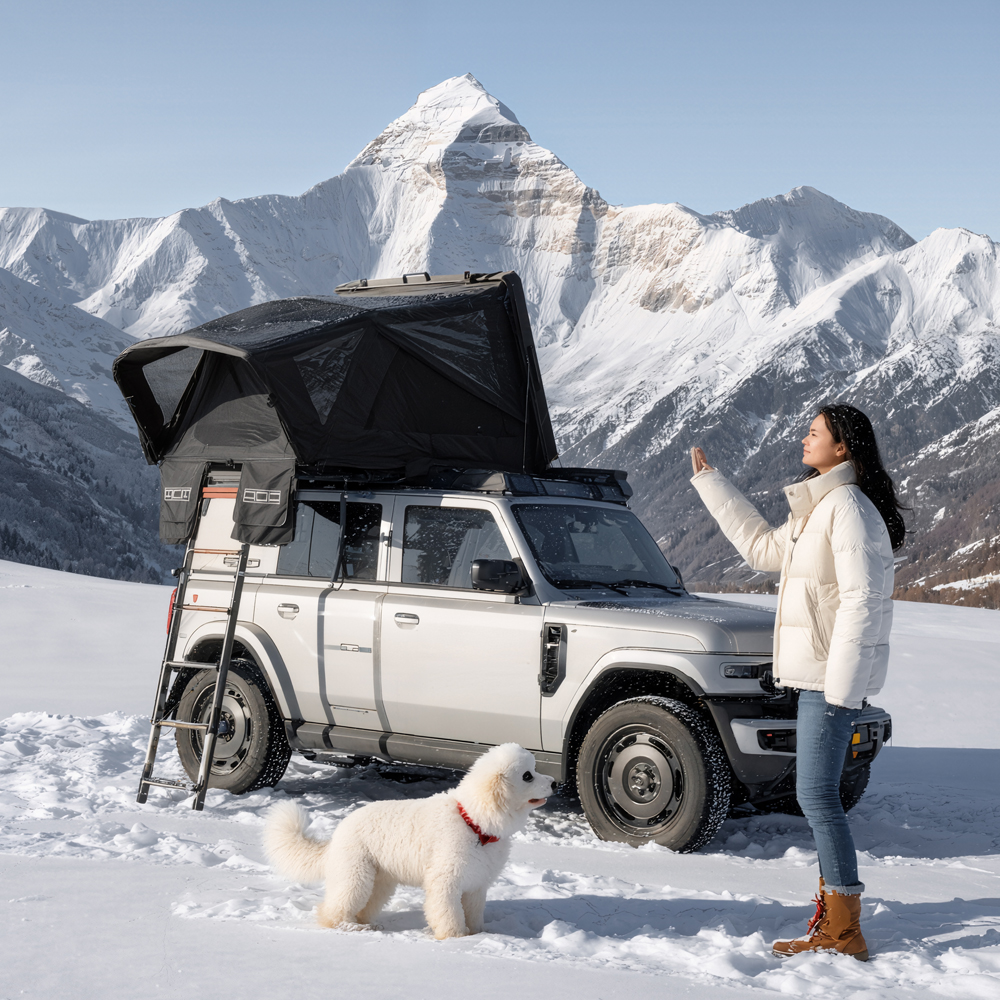
Overland roof top tents with 6cm+ foam mattresses, managed ventilation, and silicone-treated zippers function reliably down to 0°F. Below that, a thermal inner tent and closed-cell foam sleeping pads become necessary for comfortable sleeping conditions.

How do you prevent condensation in a rooftop tent in winter?

Keep at least two vents partially open in overland roof top tents during cold-weather use — one high, one low — to create a passive chimney airflow that exhausts moisture before it condenses. A thermal inner tent adds a warmer interior surface that reduces the condensation-prone surface area.

What mattress is best for winter rooftop tent camping?

A 6cm high-density foam mattress (25kg/m³ minimum) with a flannelette cover provides adequate insulation for overland roof top tents down to 20°F. For sub-zero temperatures, add a closed-cell foam pad (R-2.0+) beneath the mattress for additional ground-separation insulation.

Do hard shell or soft shell tents perform better in cold weather?

Hard shell overland roof top tents with honeycomb flooring and aluminum construction provide better cold-weather performance due to reduced air infiltration and superior structural insulation at the sleeping platform. Soft shell designs lose more heat through fabric walls and require more aggressive ventilation management.

How does altitude affect rooftop tent performance in cold weather?

Every 1,000 feet of altitude drops the effective temperature rating of overland roof top tents by roughly 3-5°F and increases UV exposure. At 10,000 feet, a tent rated for 20°F performance at sea level behaves as if rated for roughly 35°F due to reduced atmospheric heat retention and increased radiative cooling.

Can a diesel heater be safely used with a rooftop tent?

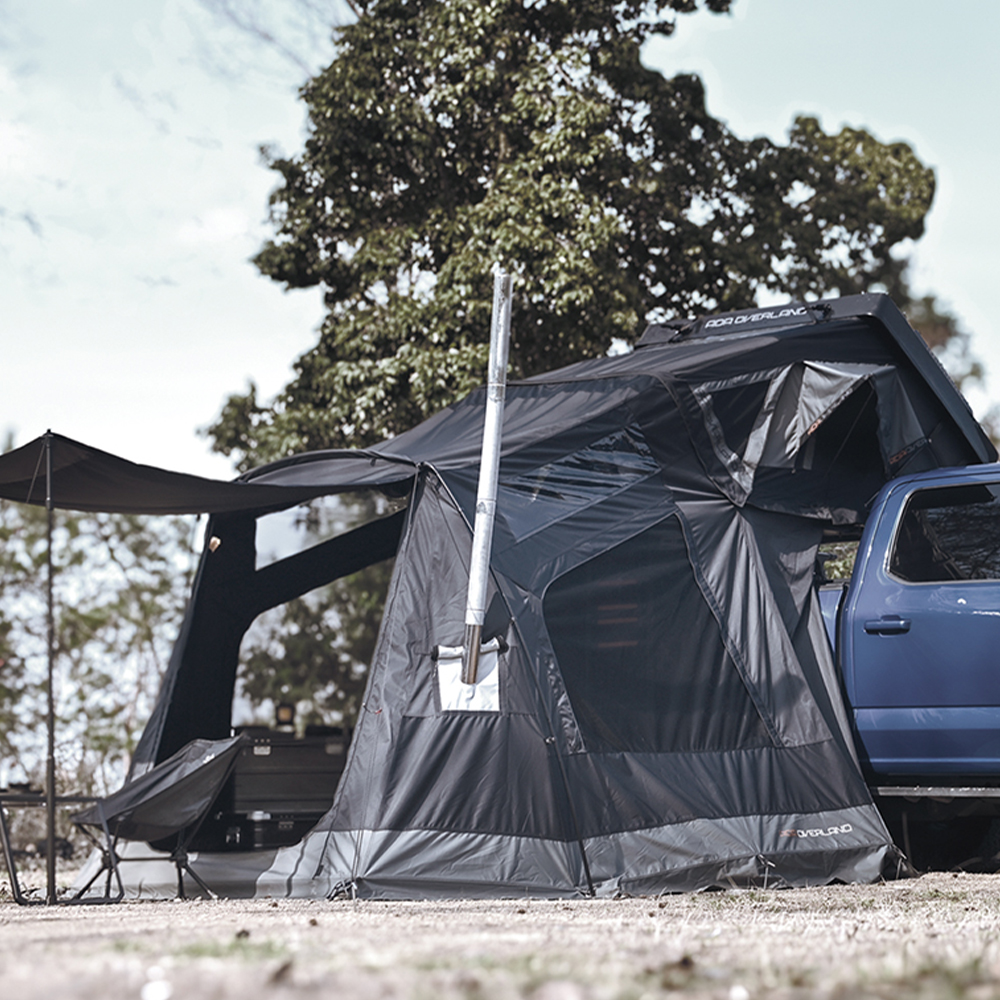
A diesel heater with an externally mounted combustion chamber and a dry-air duct into the tent is safe for overland roof top tents when the duct passes through a dedicated heater port with a fire-resistant gasket. Never route a heater exhaust into the tent interior, and always maintain the heater's minimum clearance to combustible materials as specified by the manufacturer.

can overland roof top tents be used in cold climates-1

Get a Free Quote

Our representative will contact you soon.
Email
Name
Company Name
Message
0/1000